Brigadoon
South Bay Musical Theatre - 2025
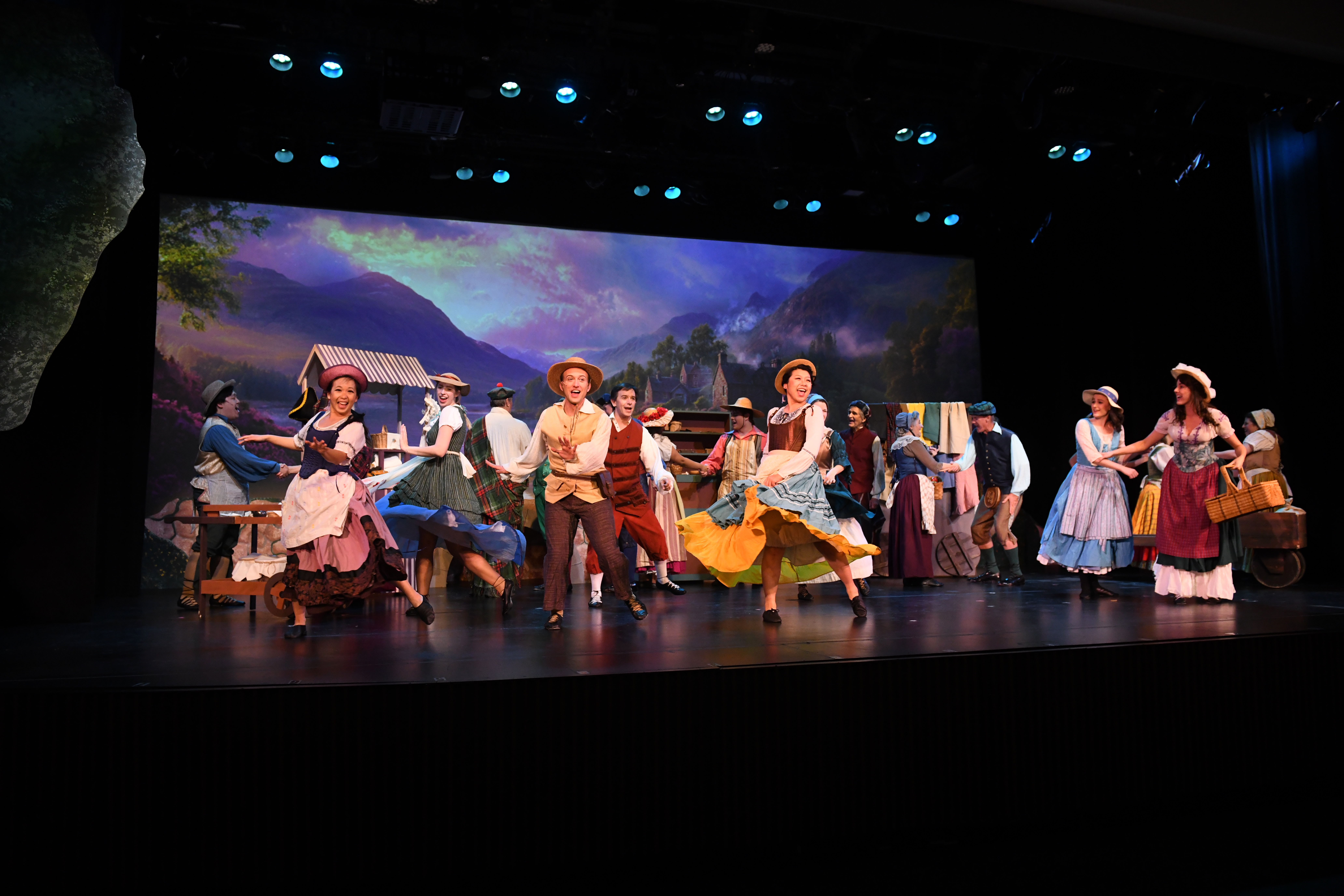
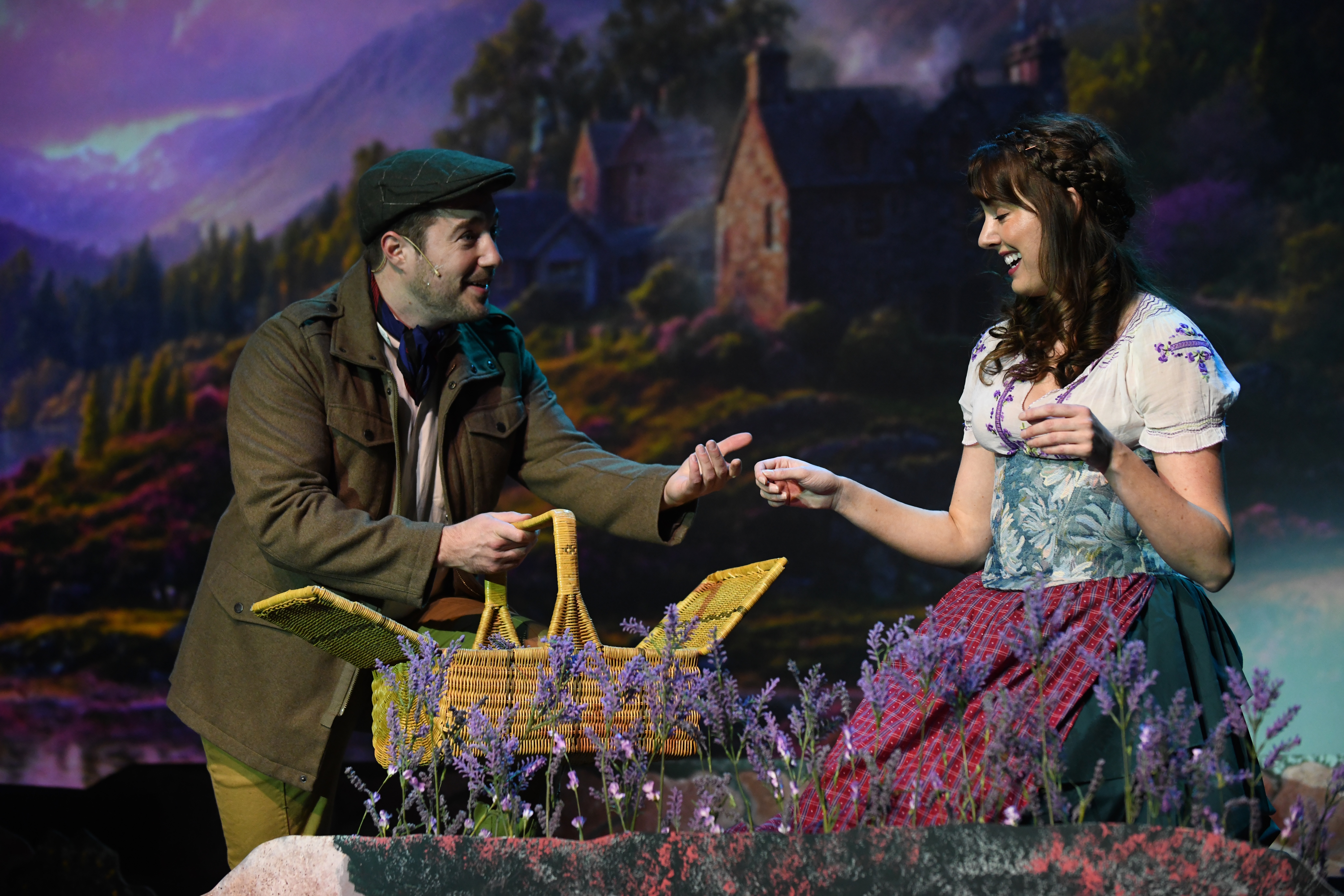
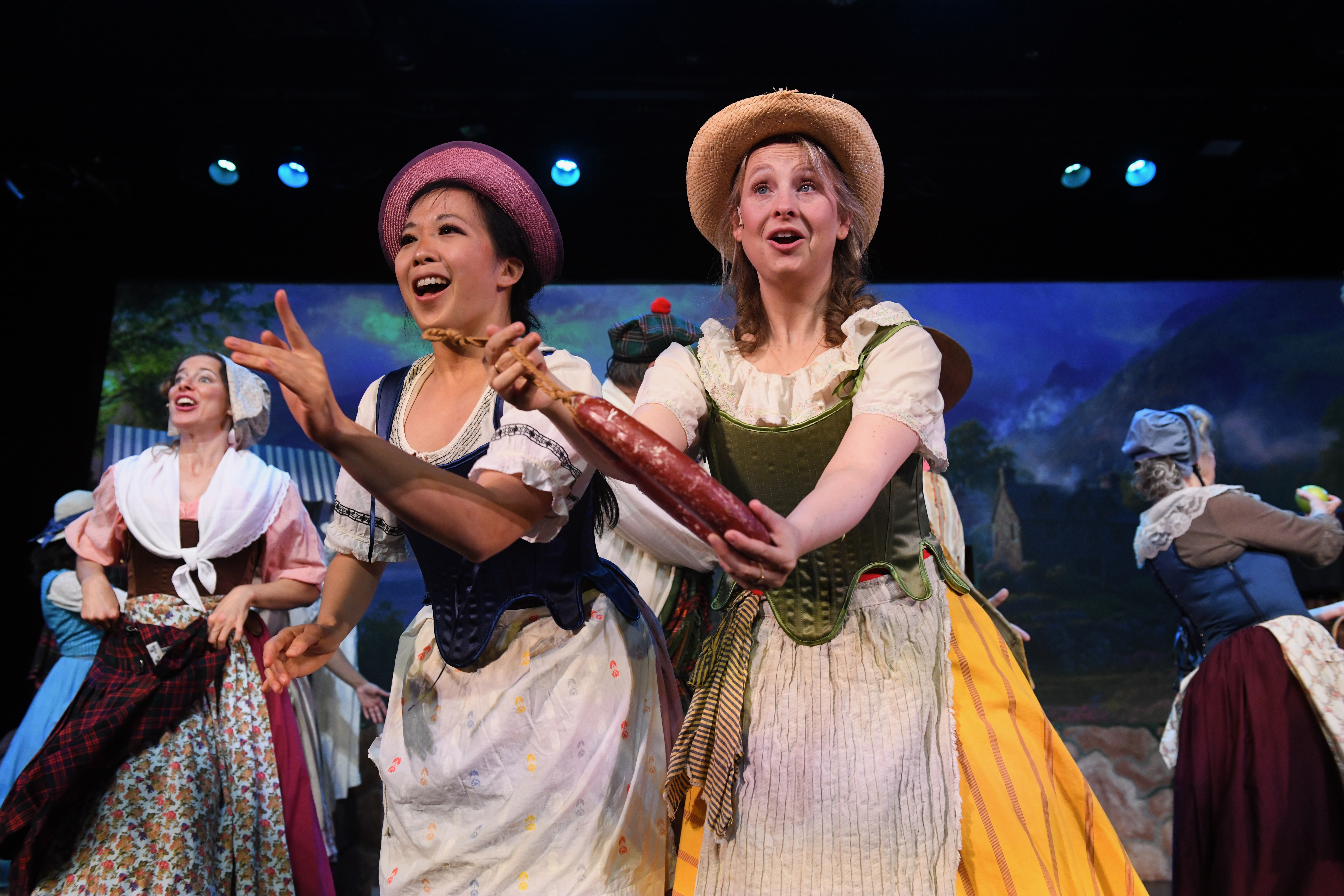
 copy.jpeg)
staff
Artistic Director: Walter M. Mayes
Acting Production Manager: Emily Tao
Director: Doug Brook
Assistant Director: Tonya Mara
Musical Director: Joseph Kelly
Vocal Director: Rachel Michelberg
Choreographer: Esther Selk
Set Designer: Bo Golden
Costume, Hair & Makeup Designer: Y. Sharon Peng
Lighting Designer: Edward Hunter
Sound Designer: Dan Singletary
Props Designer: Emily Tao
Projections Designer: Don Nguyen
Dialect Coach: Kimily Conkle
Fight Coordinator: Tom Shamrell
Stage Manager: Philip Jacke
Assistant Stage Manager: Emi Komatsu
Photography: Dave Lepori
construction & set dressing: main set pieces
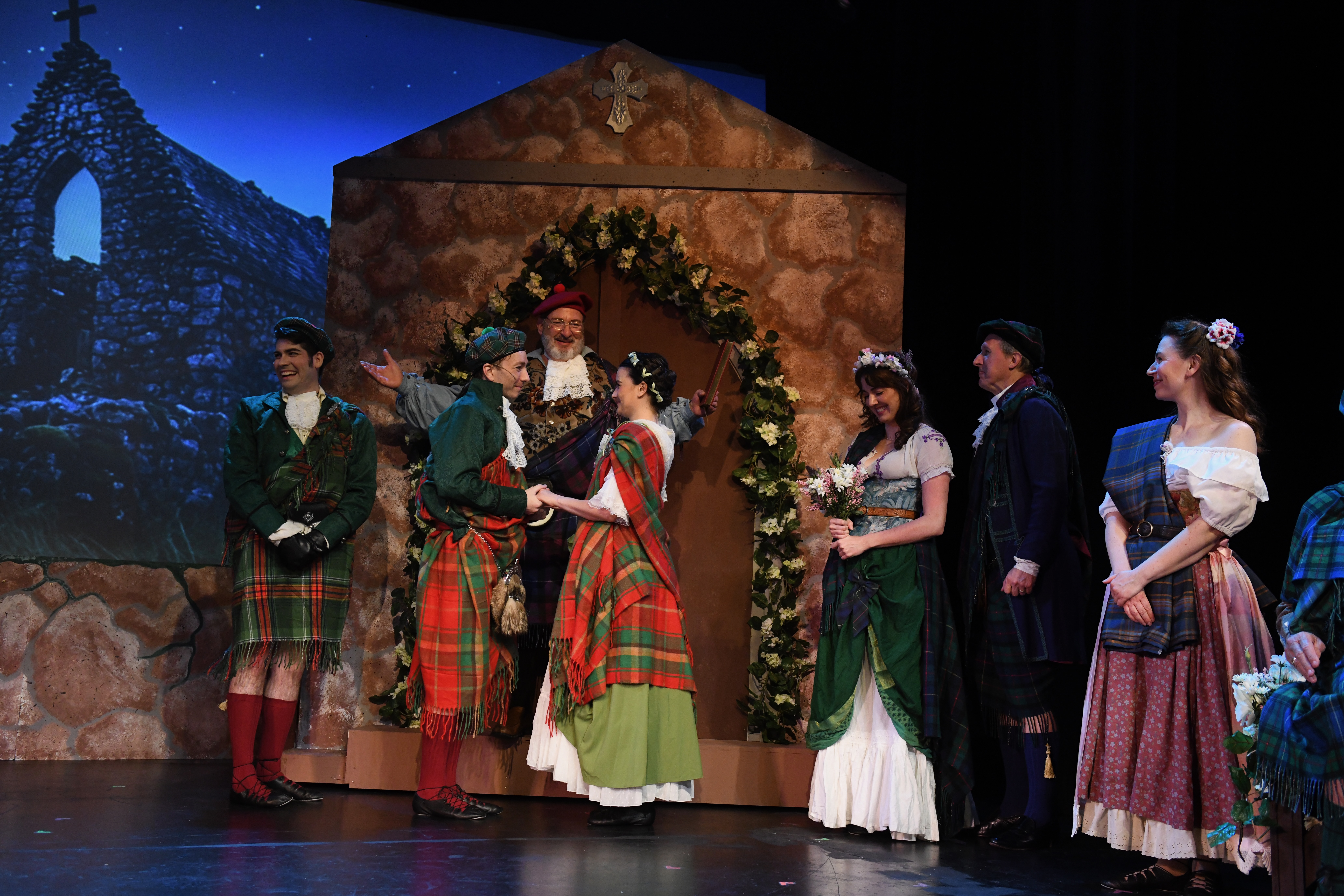
church & house
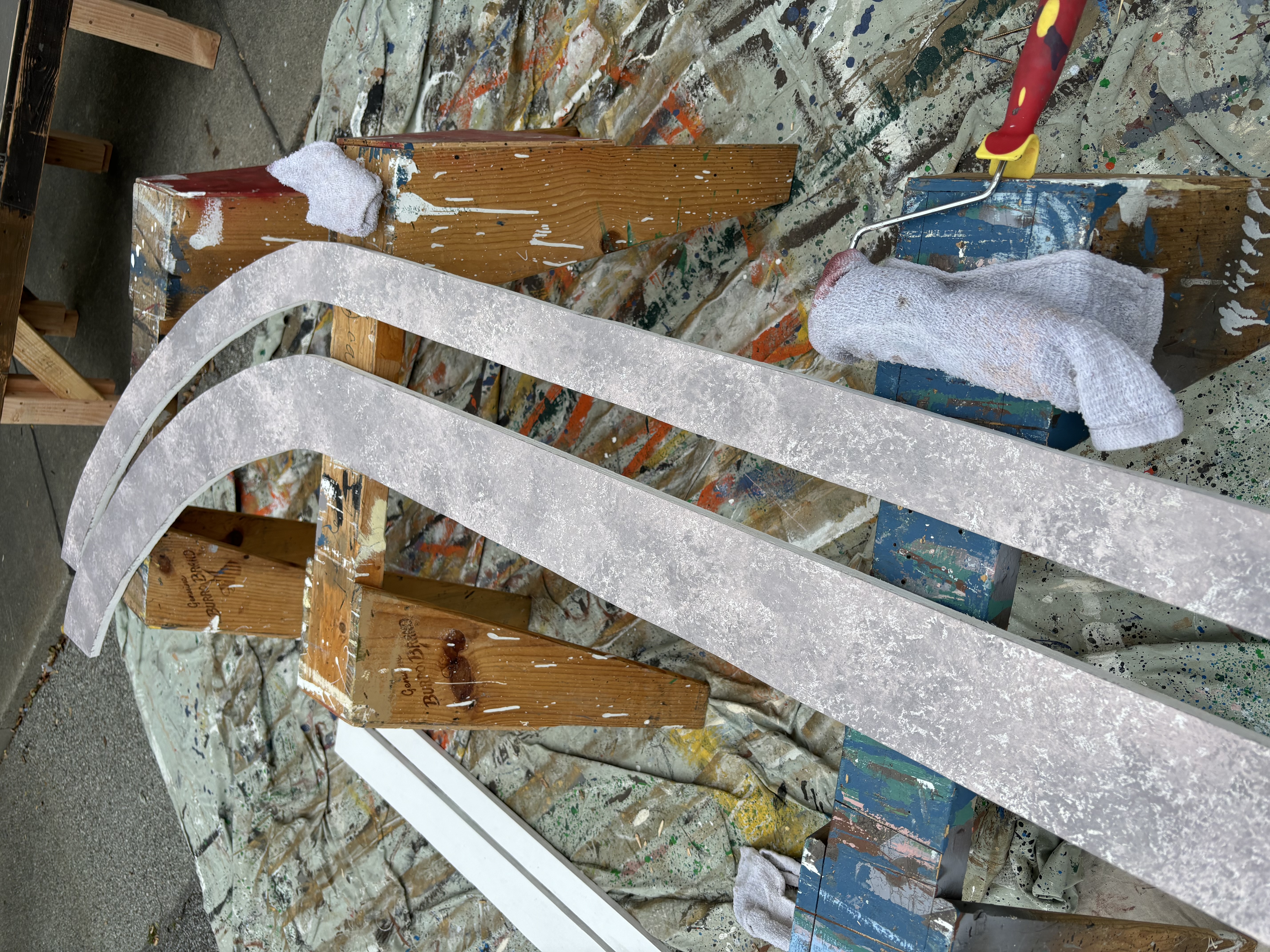
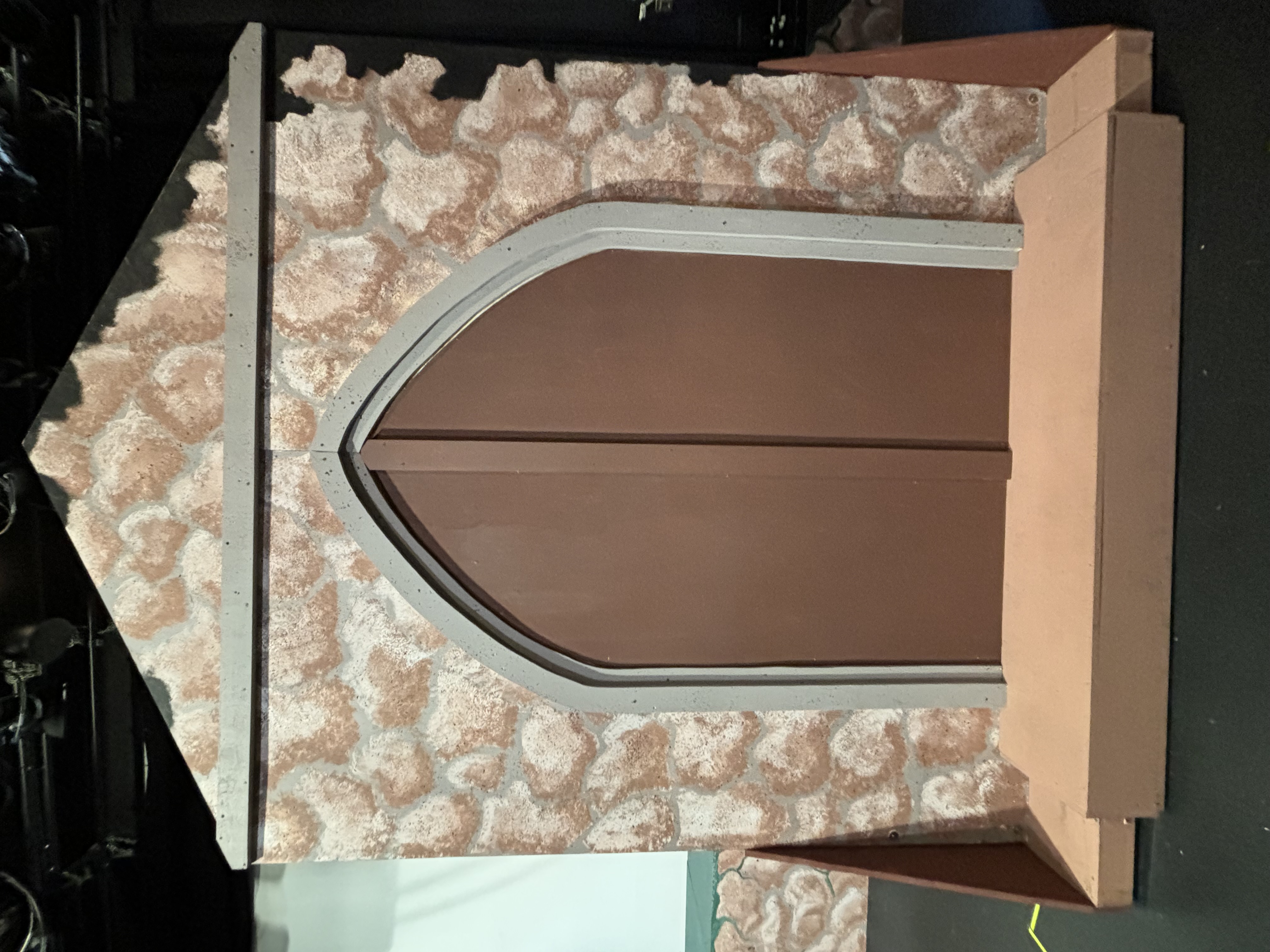
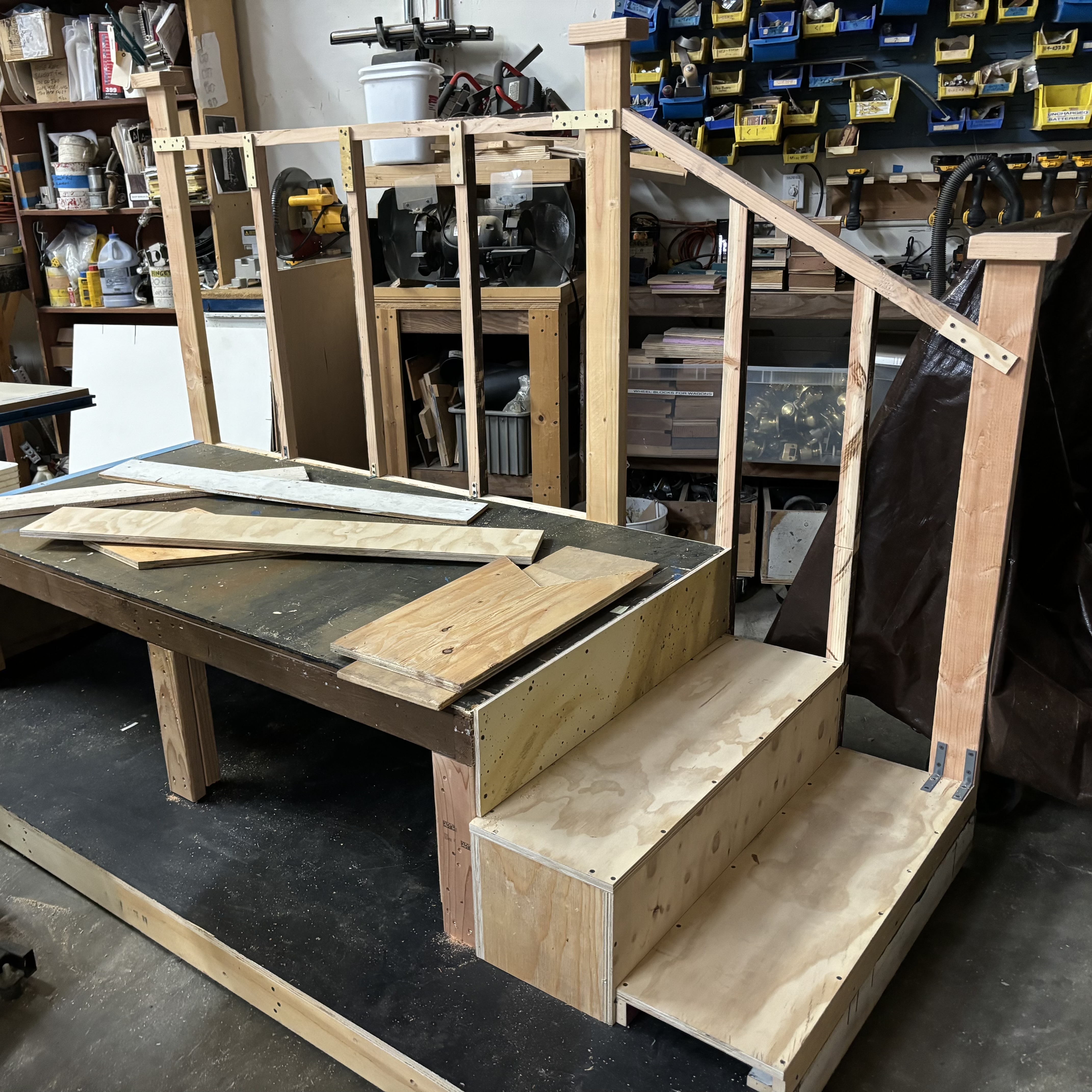
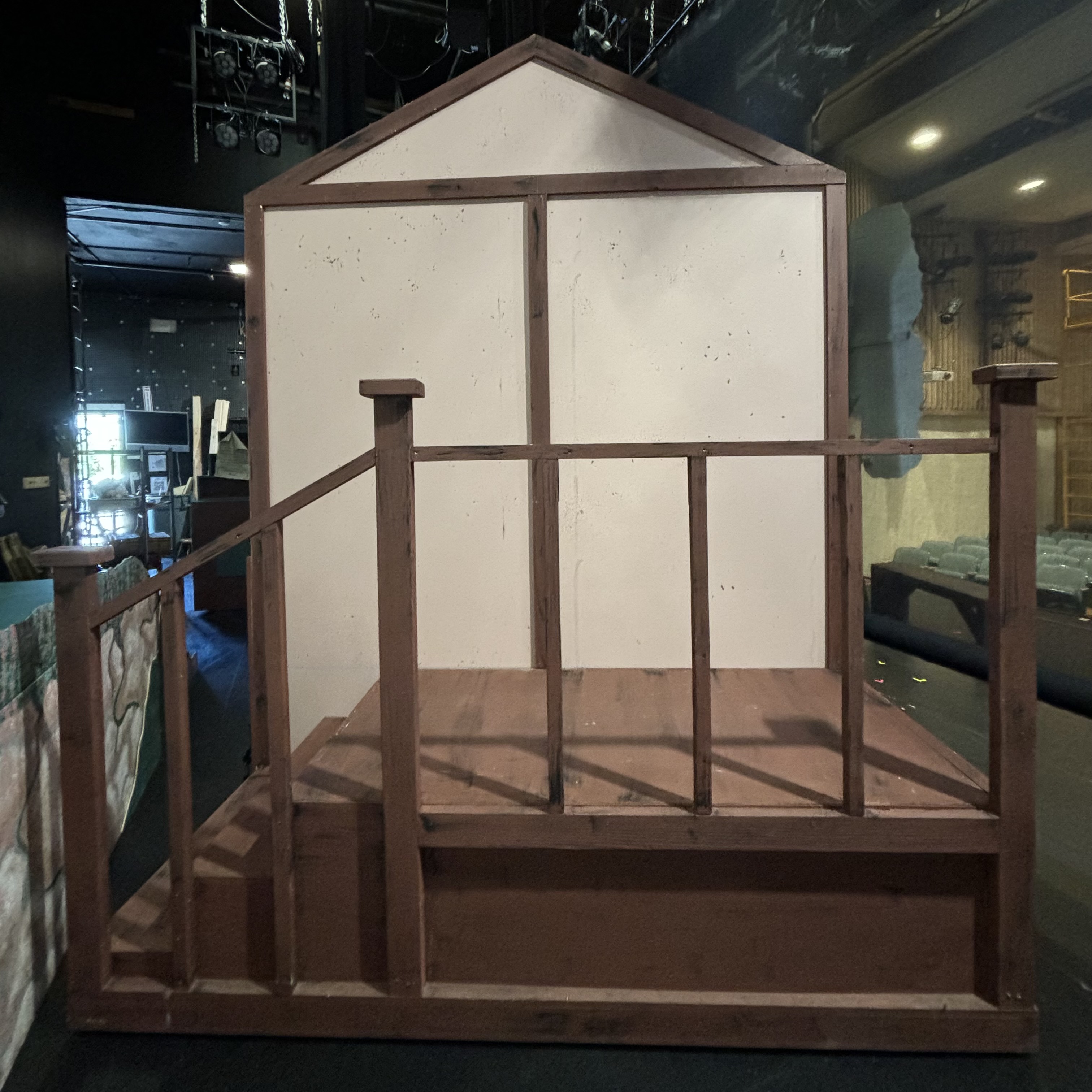
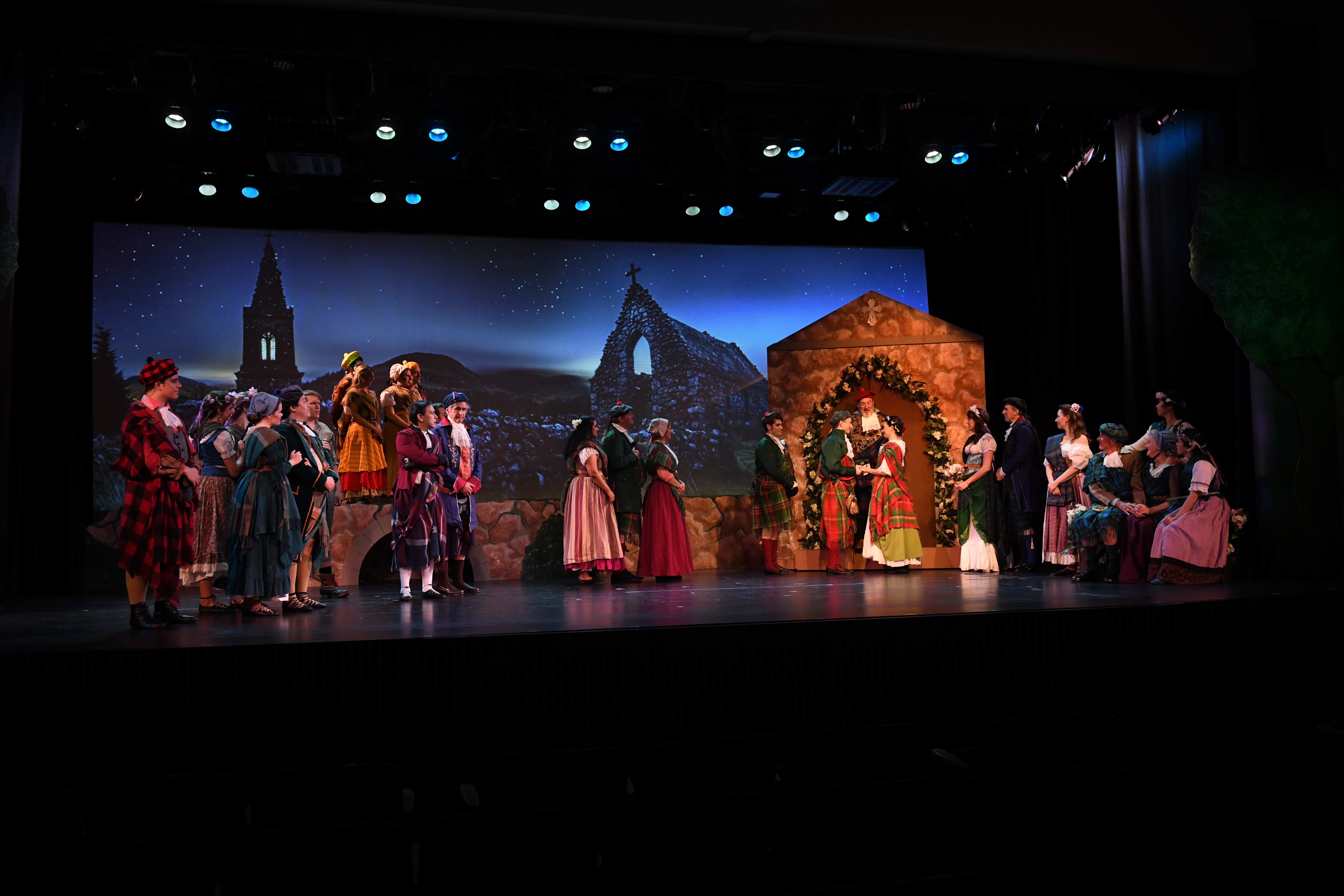
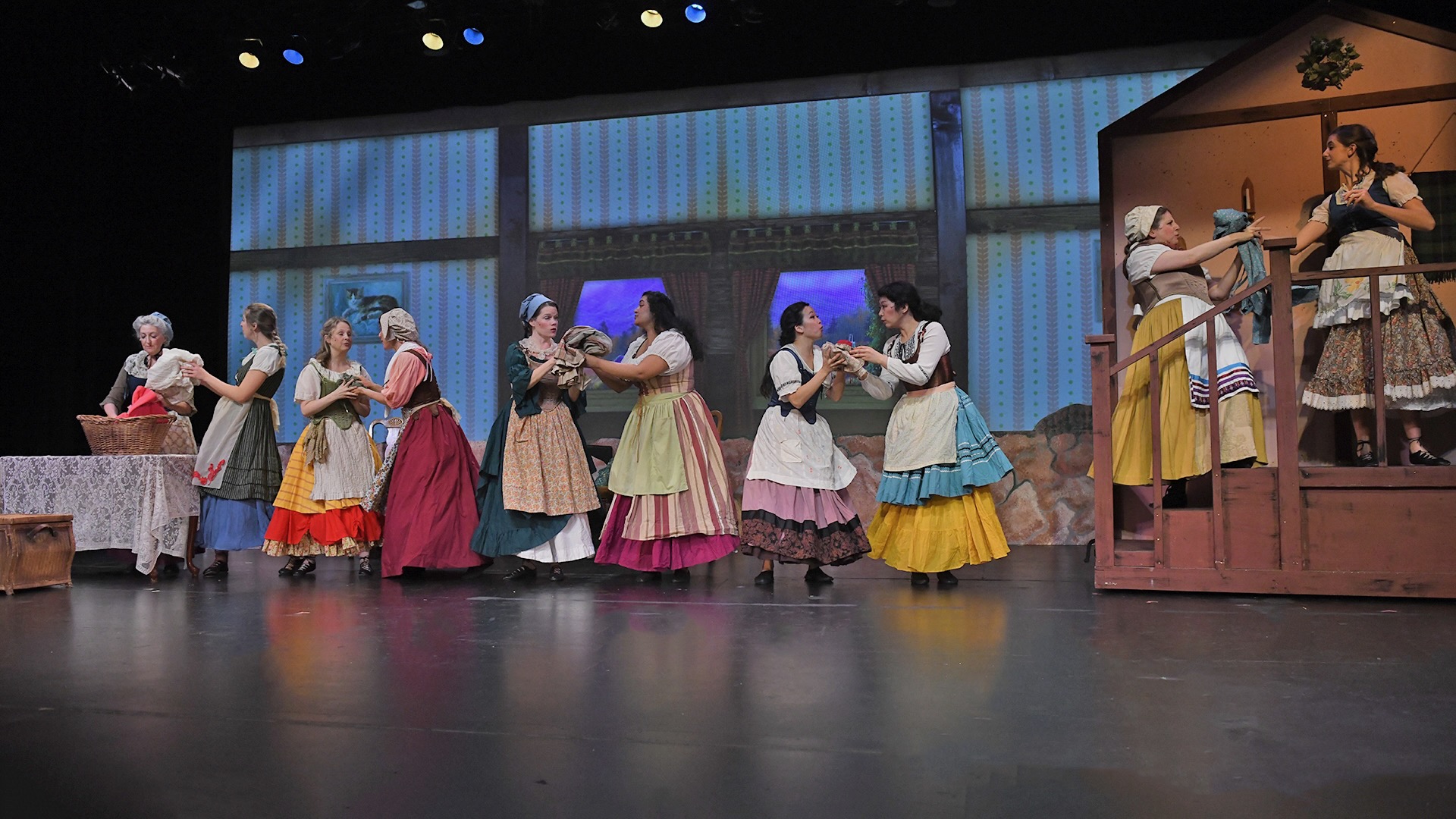
the house & church were built on one 4x8 platform on castors. a double sided flat stood in the middle, which meant you could rotate the platform depending on the scene
shed & bar
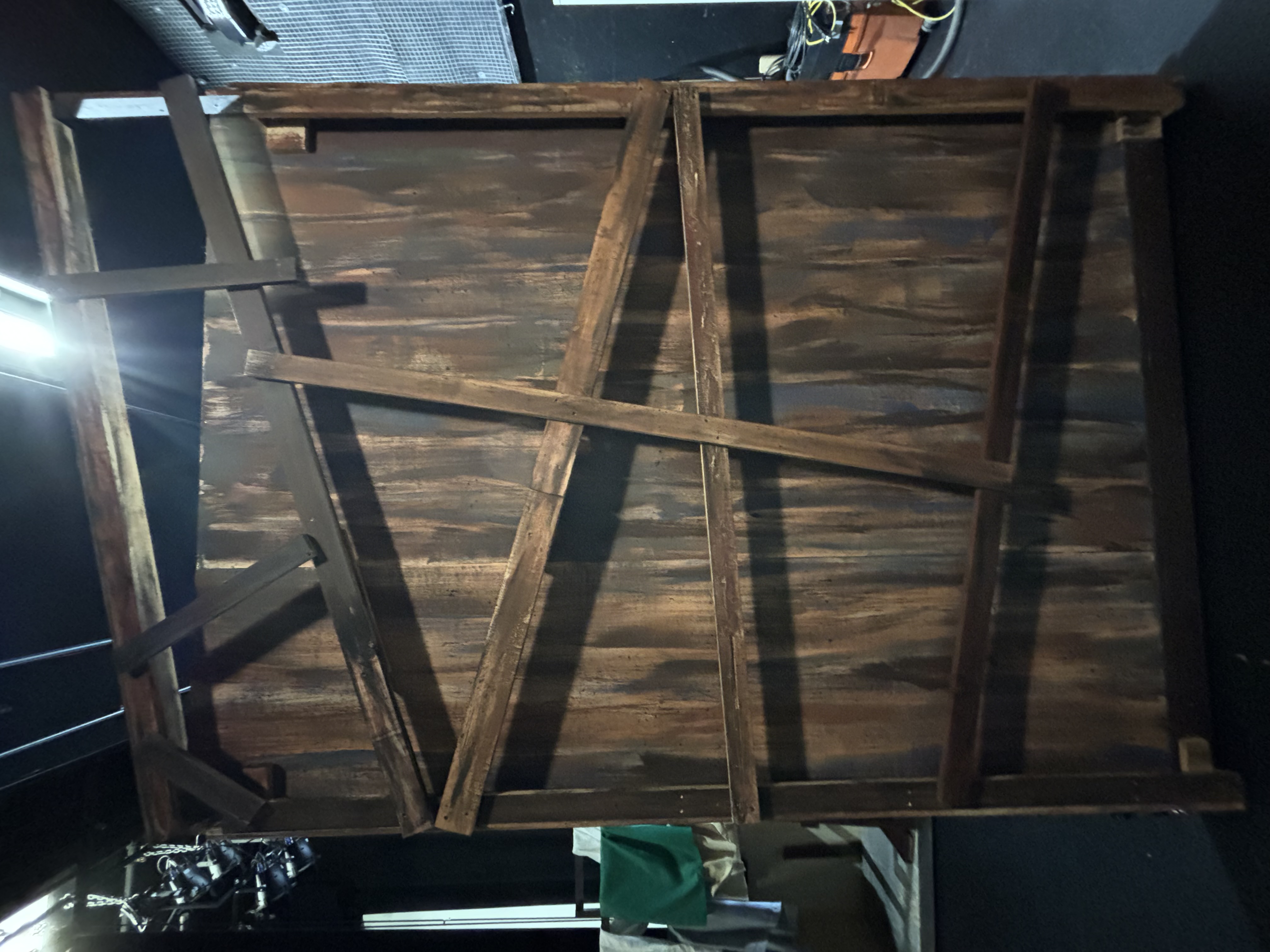
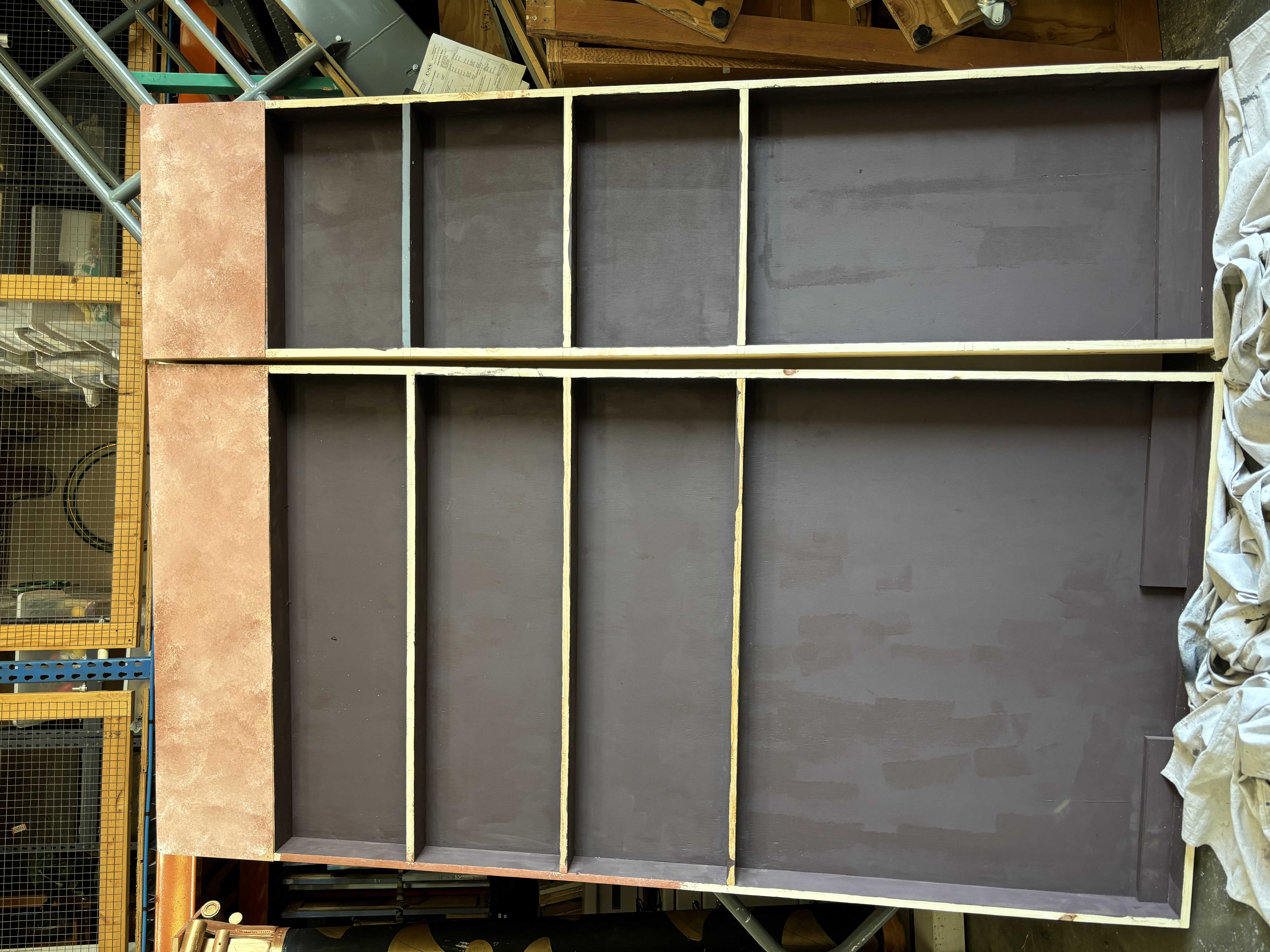
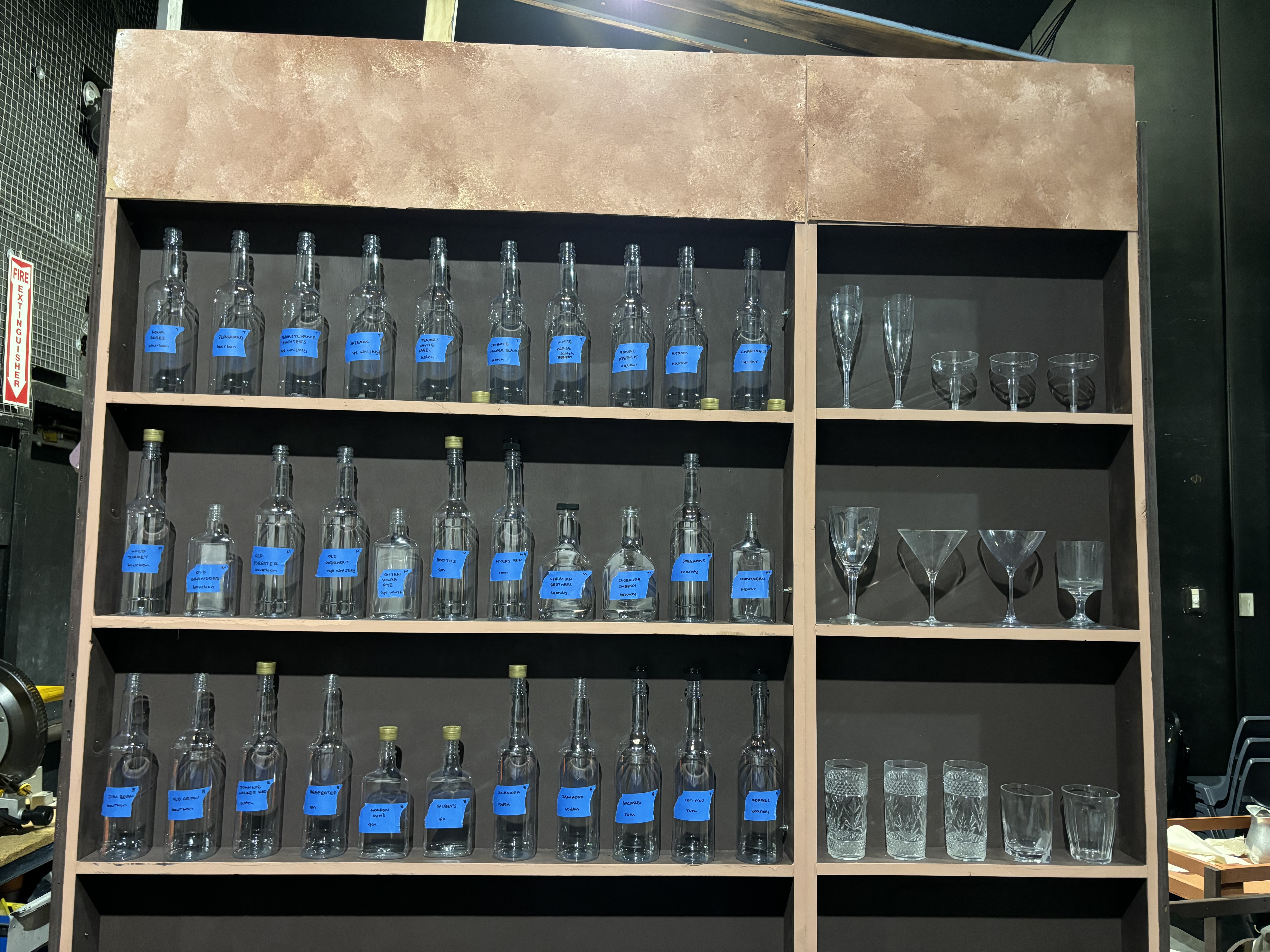
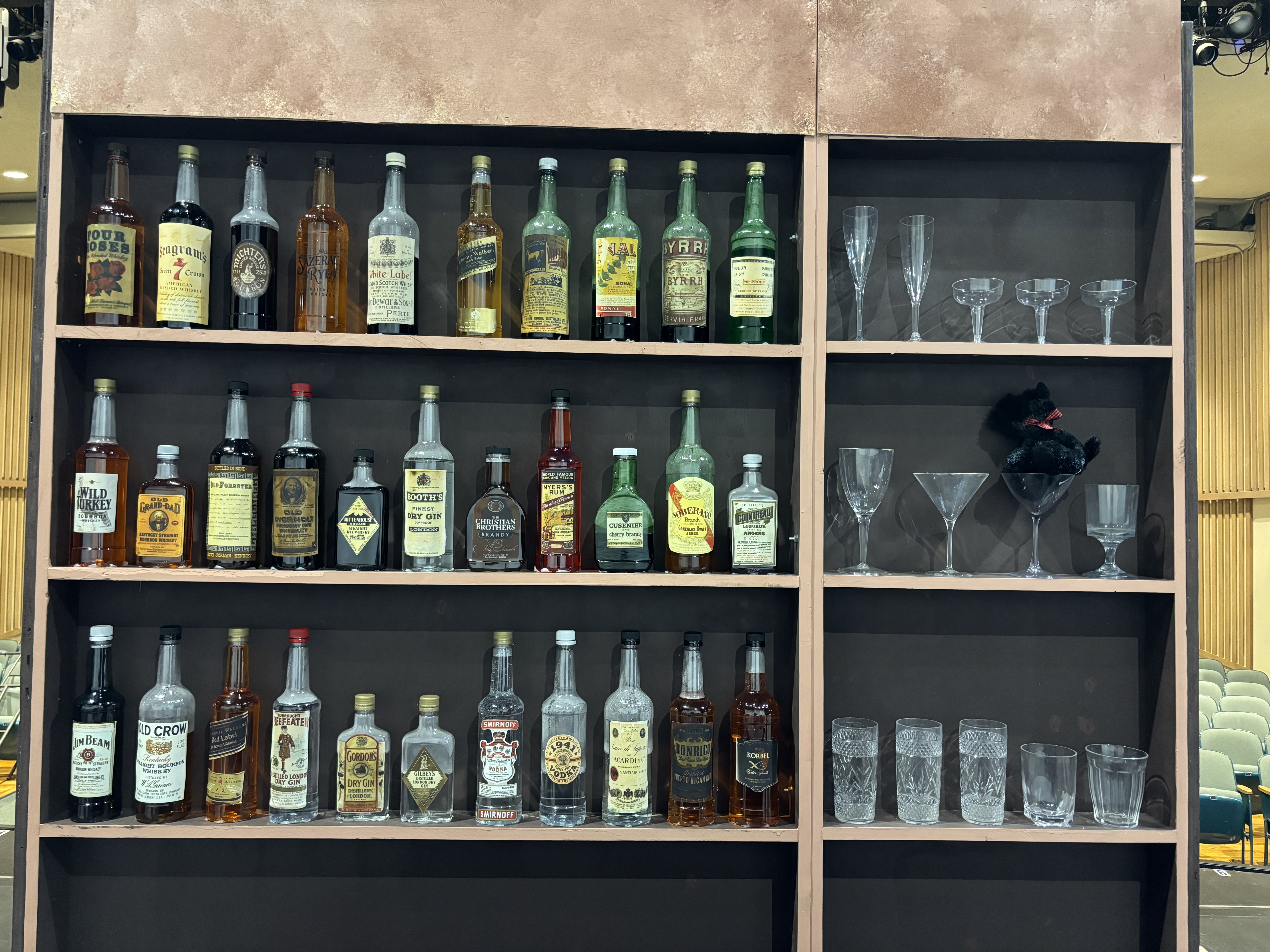
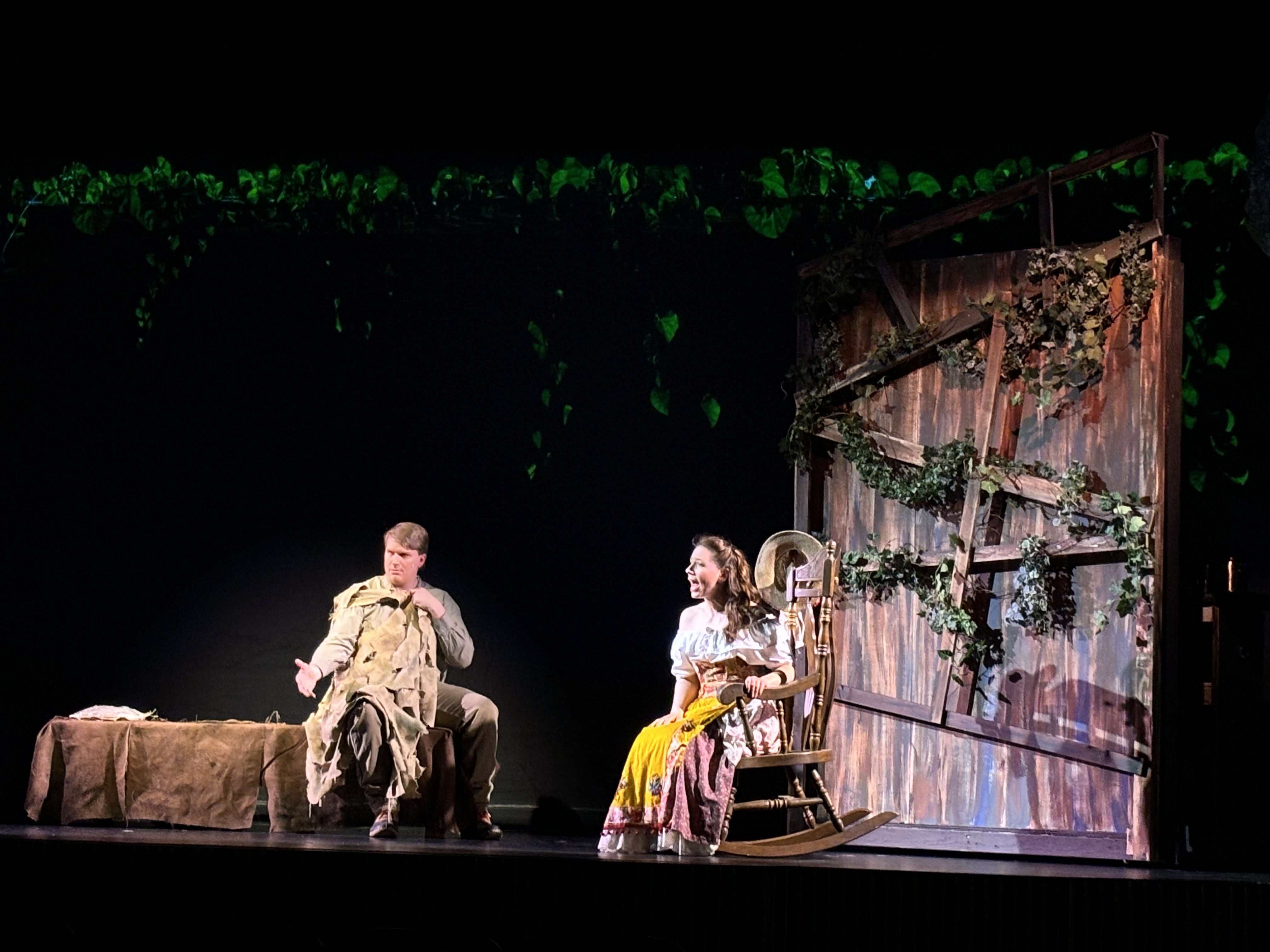
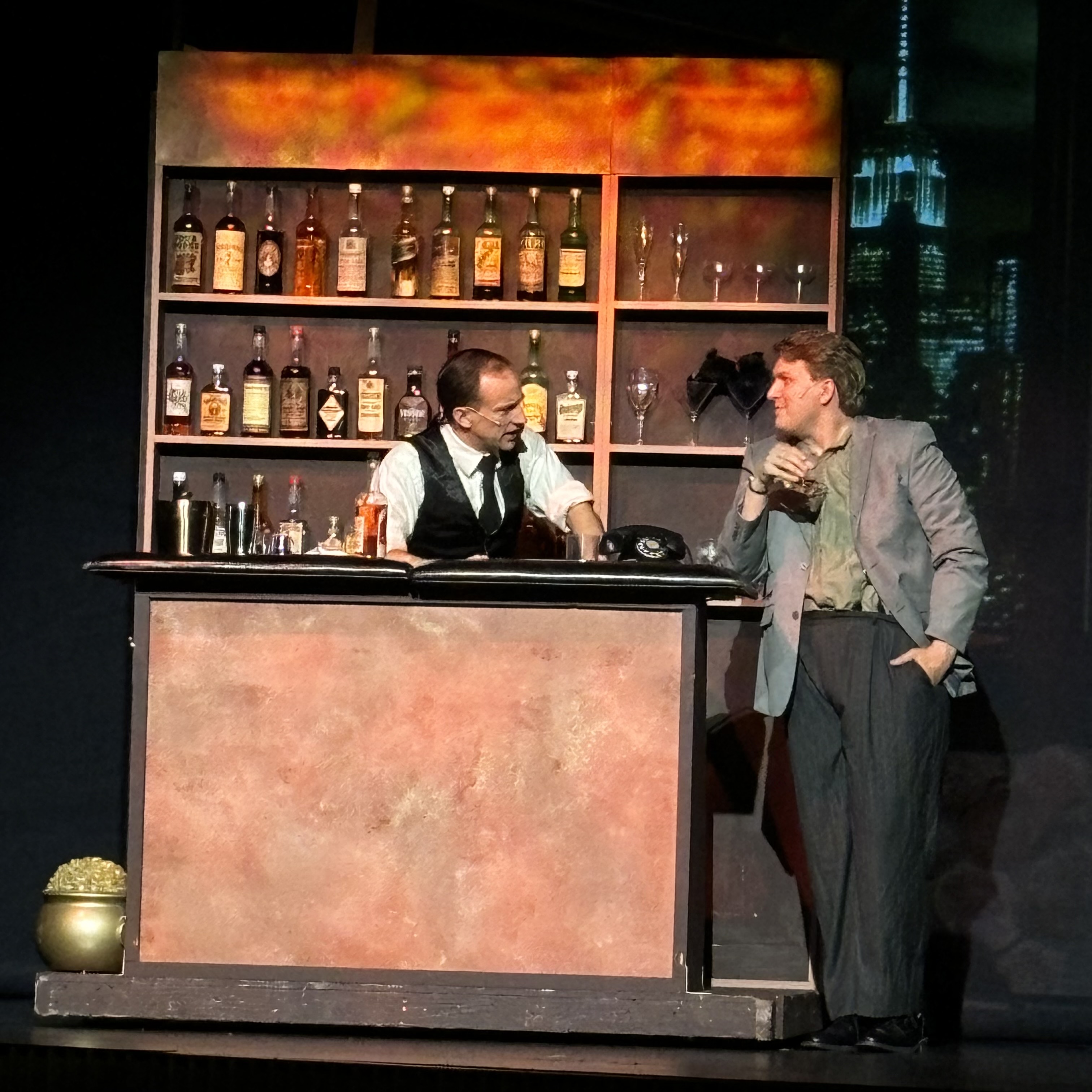
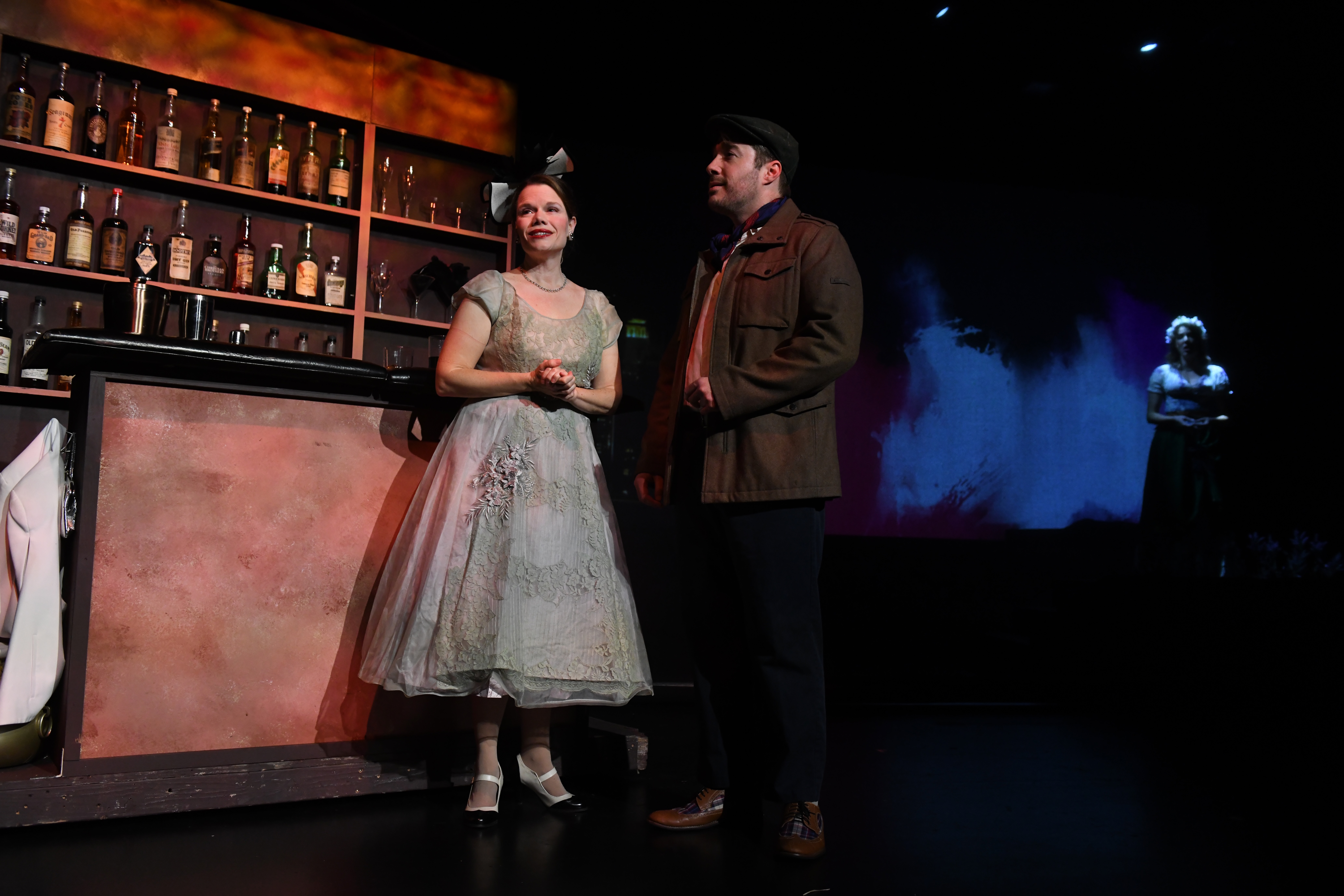
the shed & bar were built with the same design as the church & house, but instead of a double sided flat dividing the two, two Hollywood flats stood in the middle
the bar used only plastic bottles & cups for safety reasons, since the platform could move and actors stood in front of it
I researched 1940s alcohol brands, printed their labels and taped them onto the plastic bottles. each bottle was filled with water and food coloring
construction & set dressing: booths & carts
clothing booth
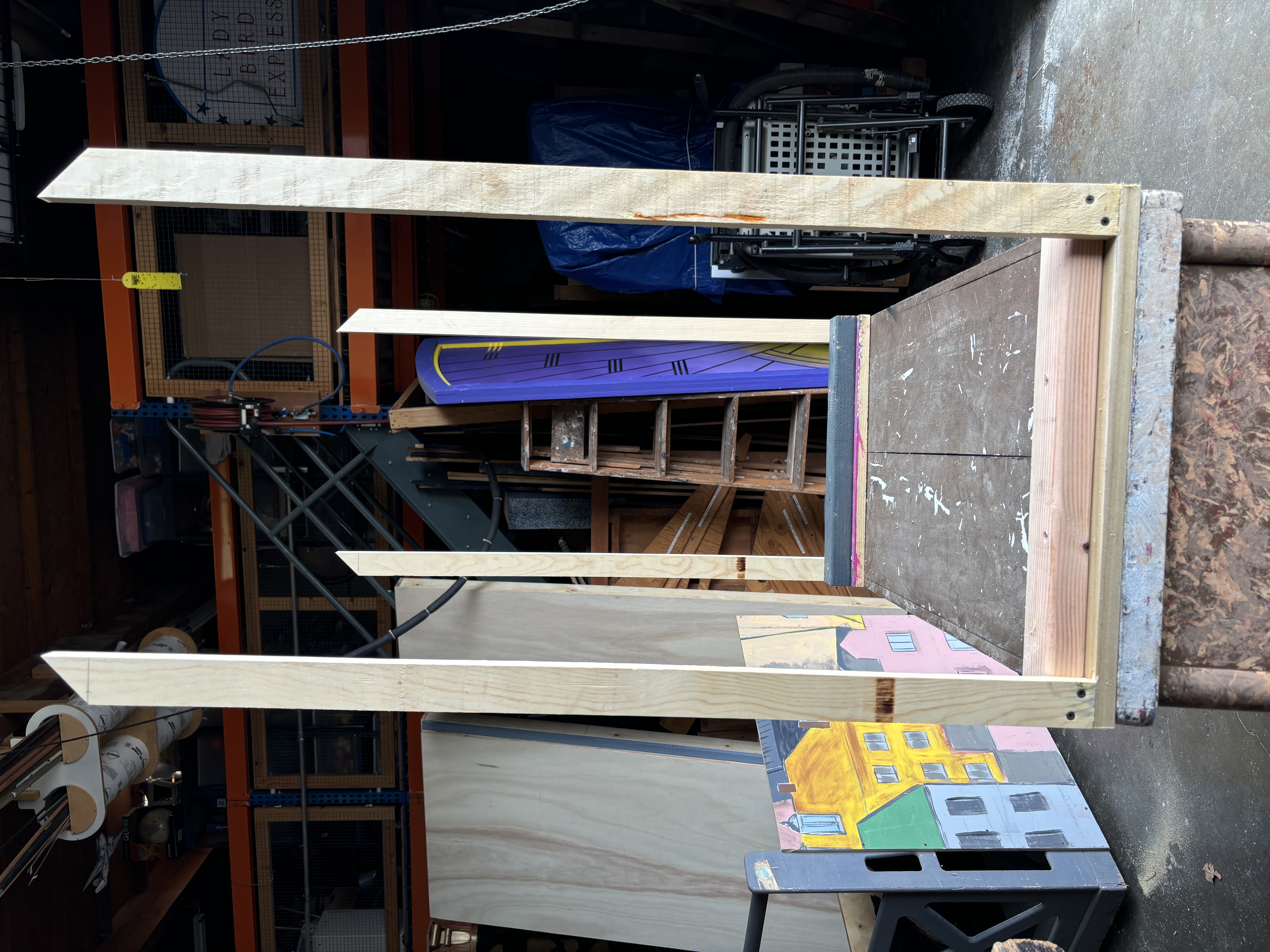
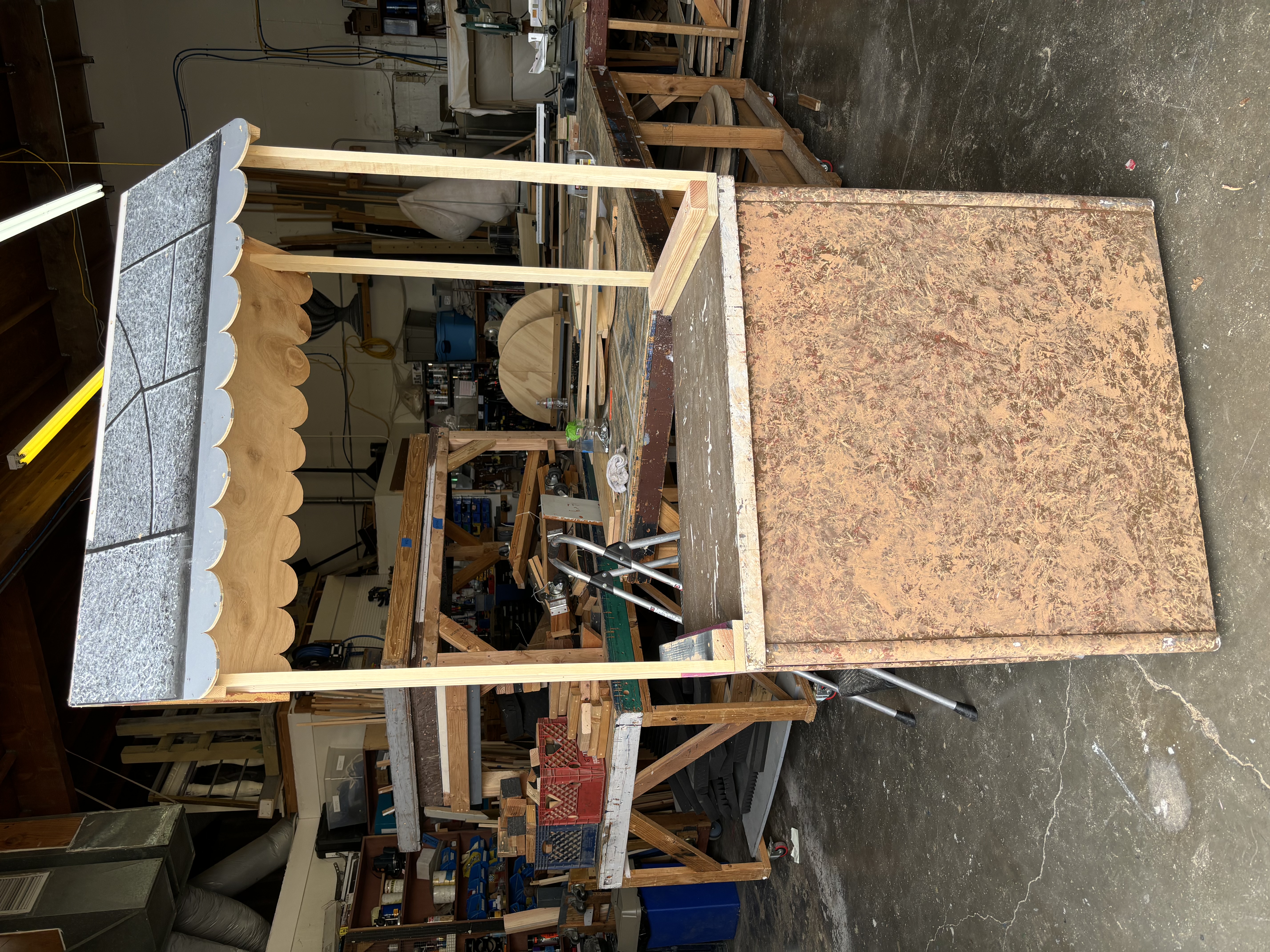
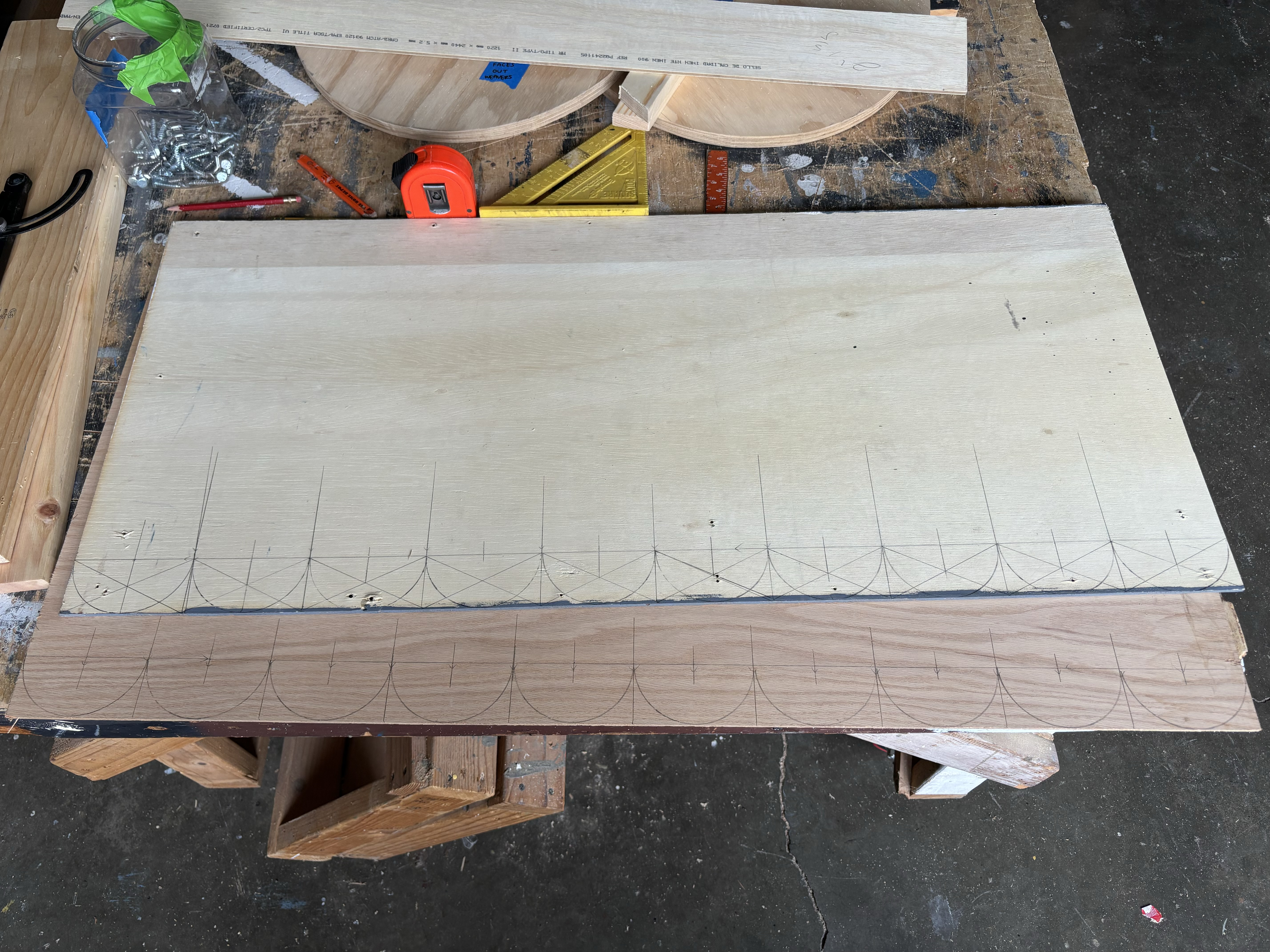
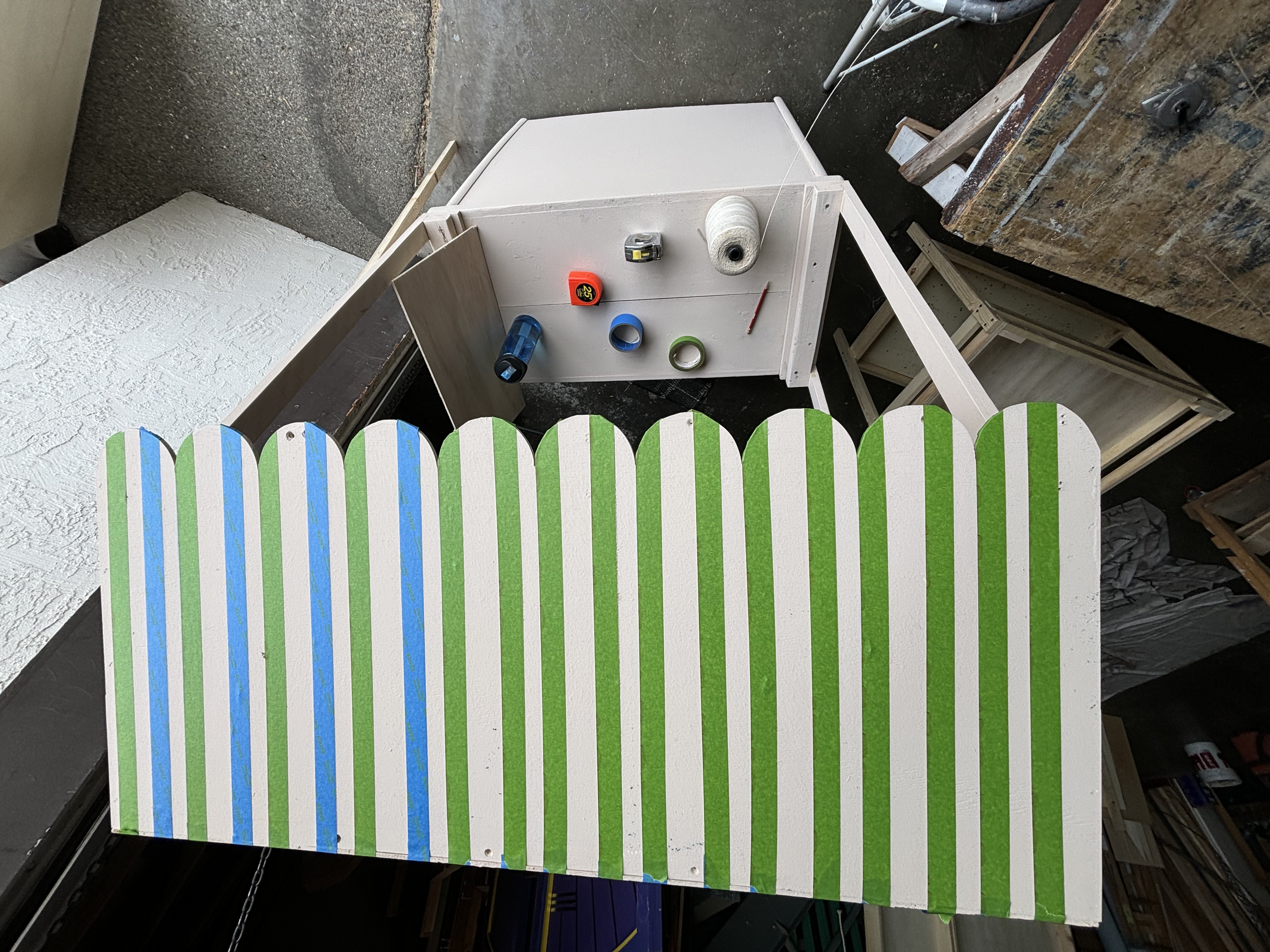
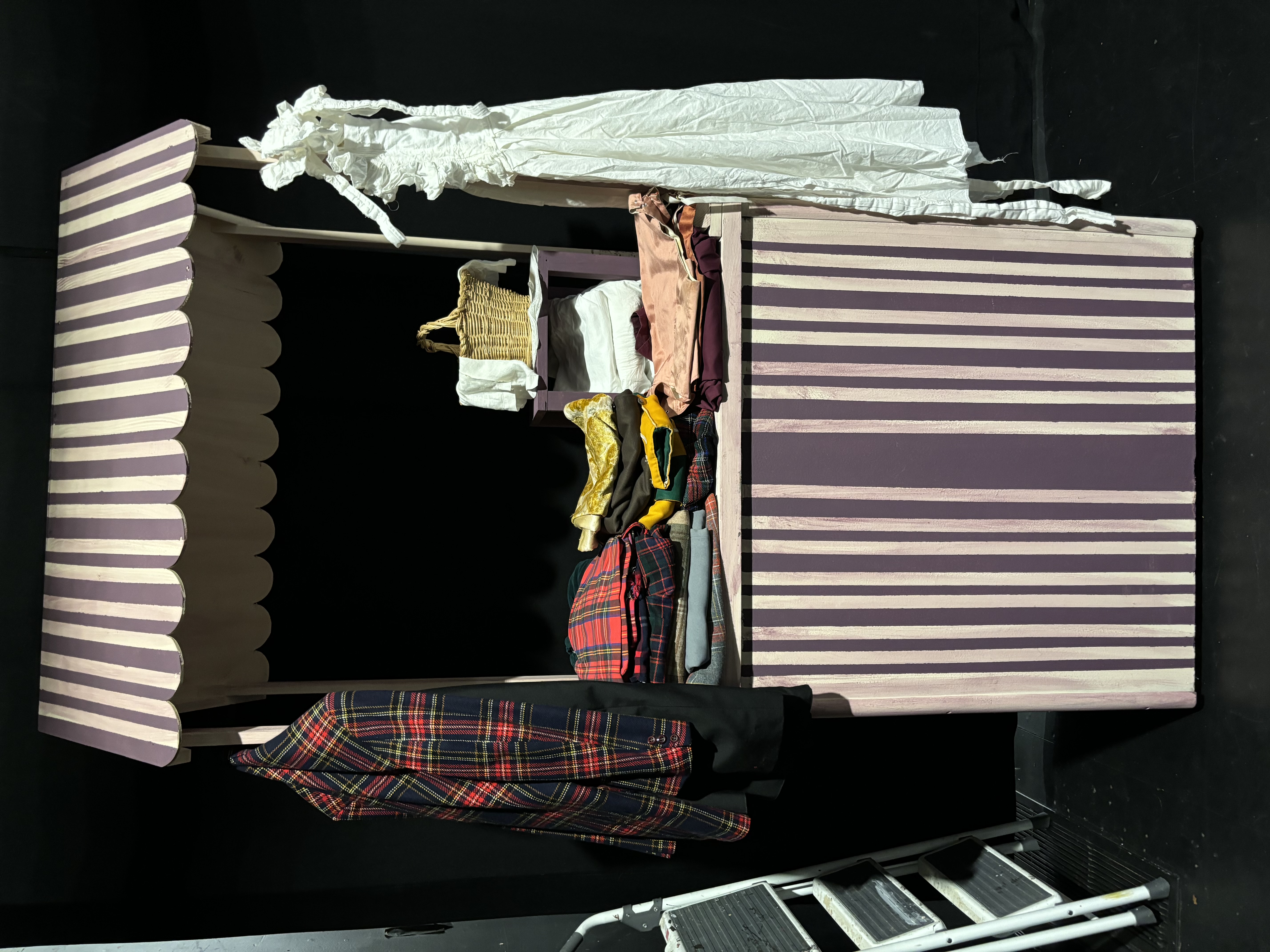
all booths were made with existing carts as the bases. for this one, all we had to do was add the vertical pieces of wood that hold up the roof and the roof itself. then we could paint it!
weaving booth
candy booth
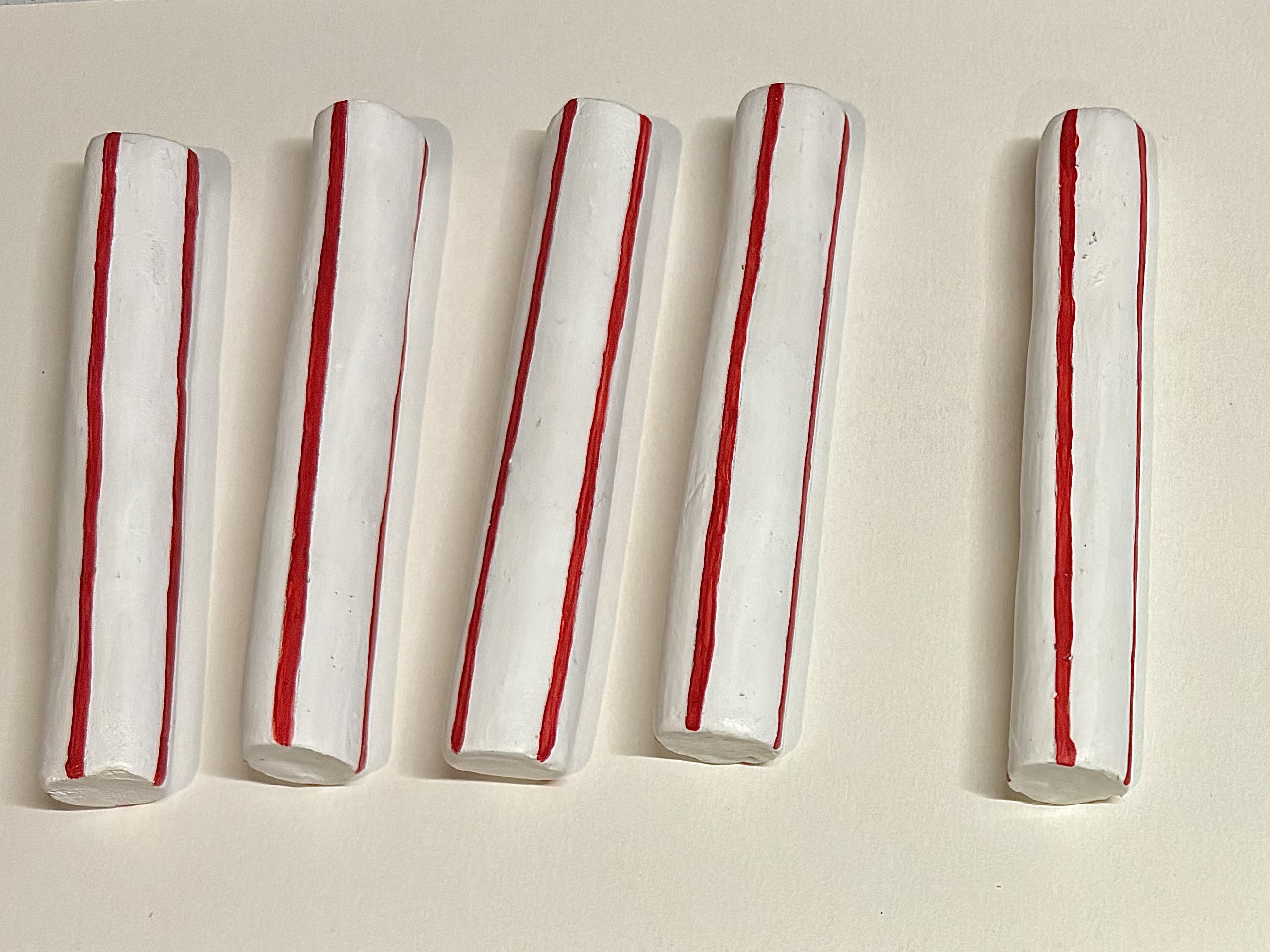
all of the candy in the candy booth were typical of those you might find in 1750s Scotland. the peppermint sticks were created by rolling air dry clay into short cylinders and painting them white with red stripes
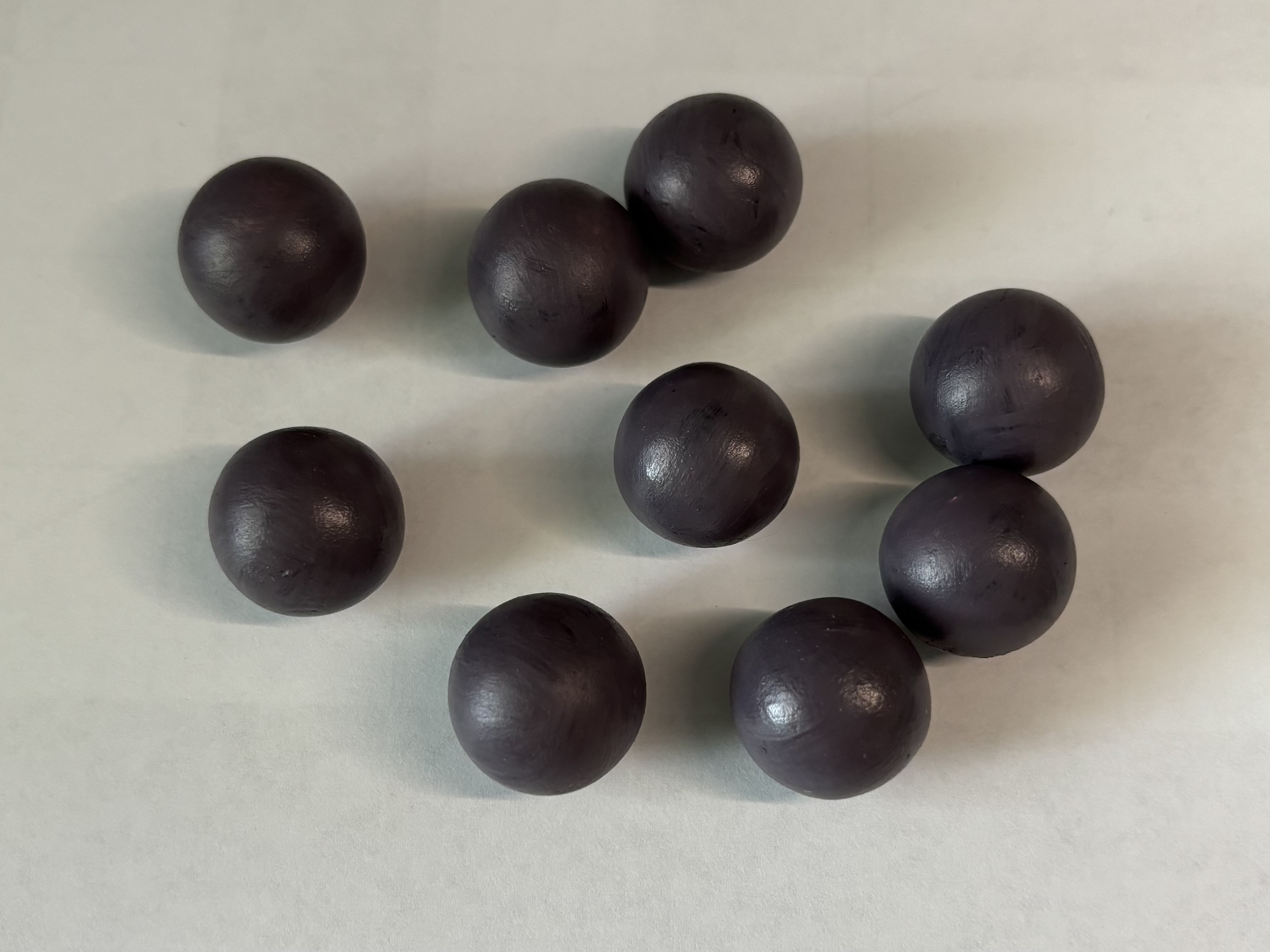
to replicate sugar plums, I bought some small wooden balls, painted them purple, and later coated them in clear glitter (to act as sugar)
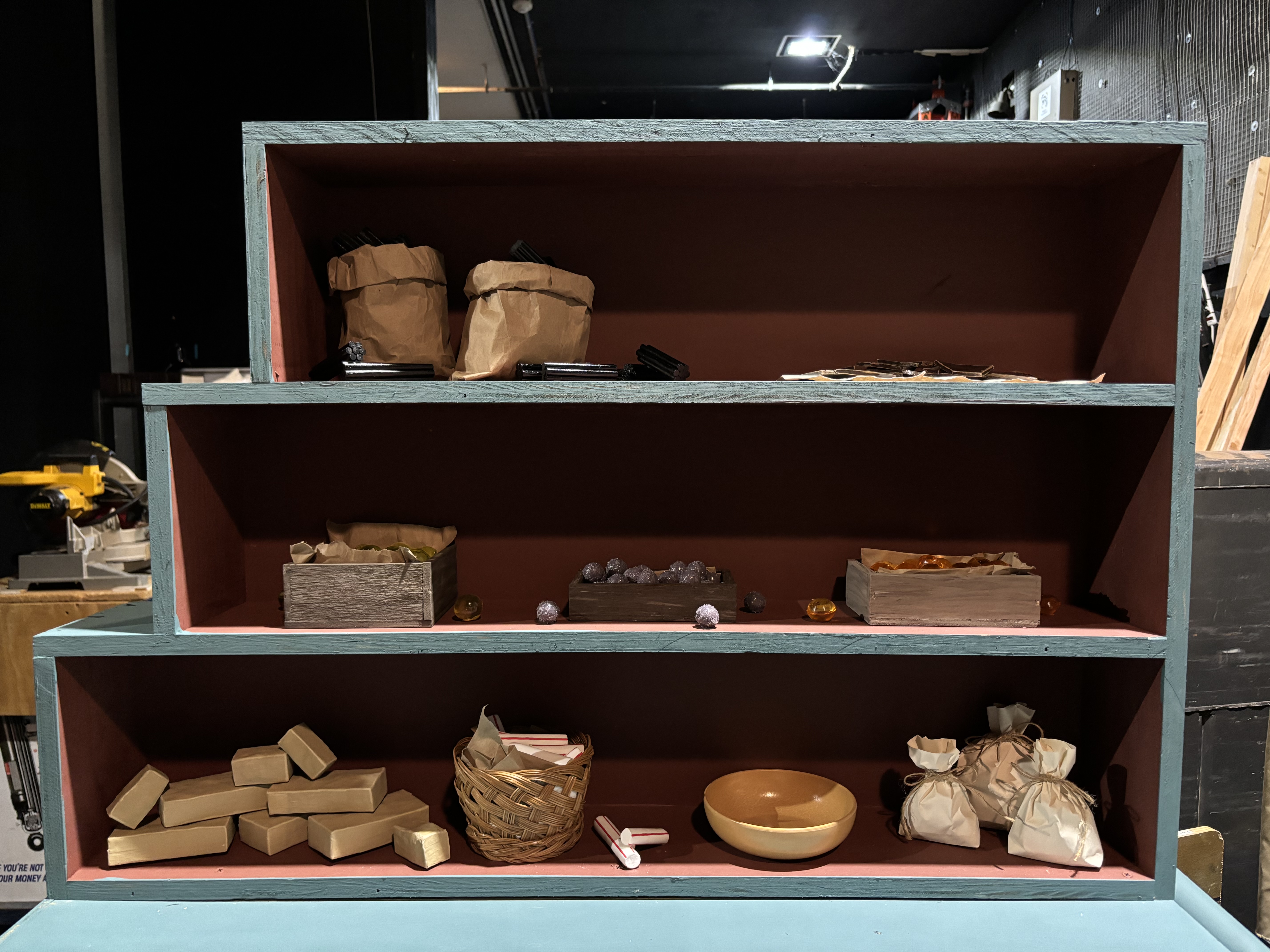
other candies not shown:
- licorice (top left) made by glueing wooden dowels together
- soor plooms & orange
candies (middle left & right) made from resin & alcohol inks
- Scottish tablet (bottom left) made from slicing white floral foam into rectangles, wrapping them in tape, paper macheing and painting
them beige
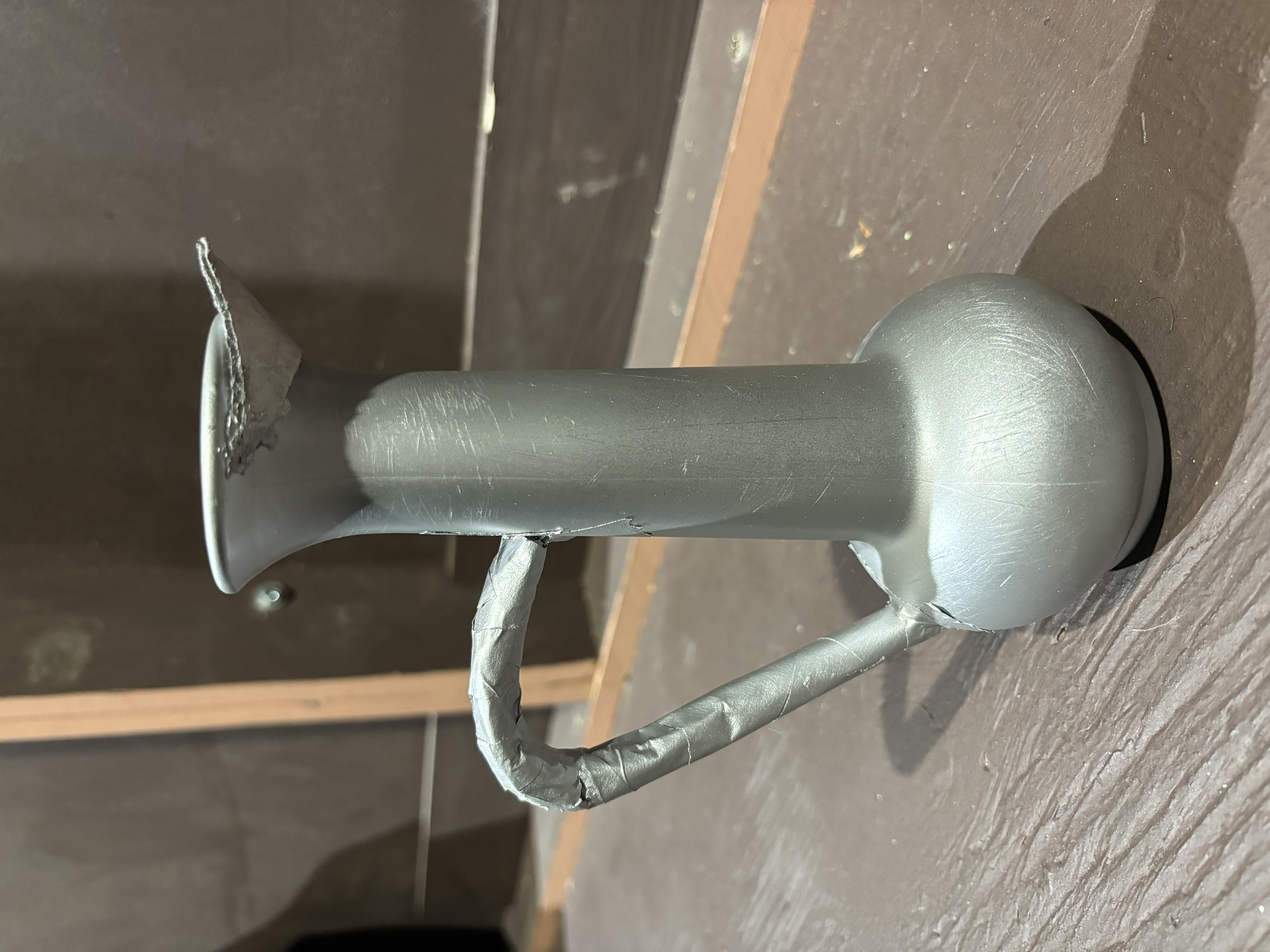
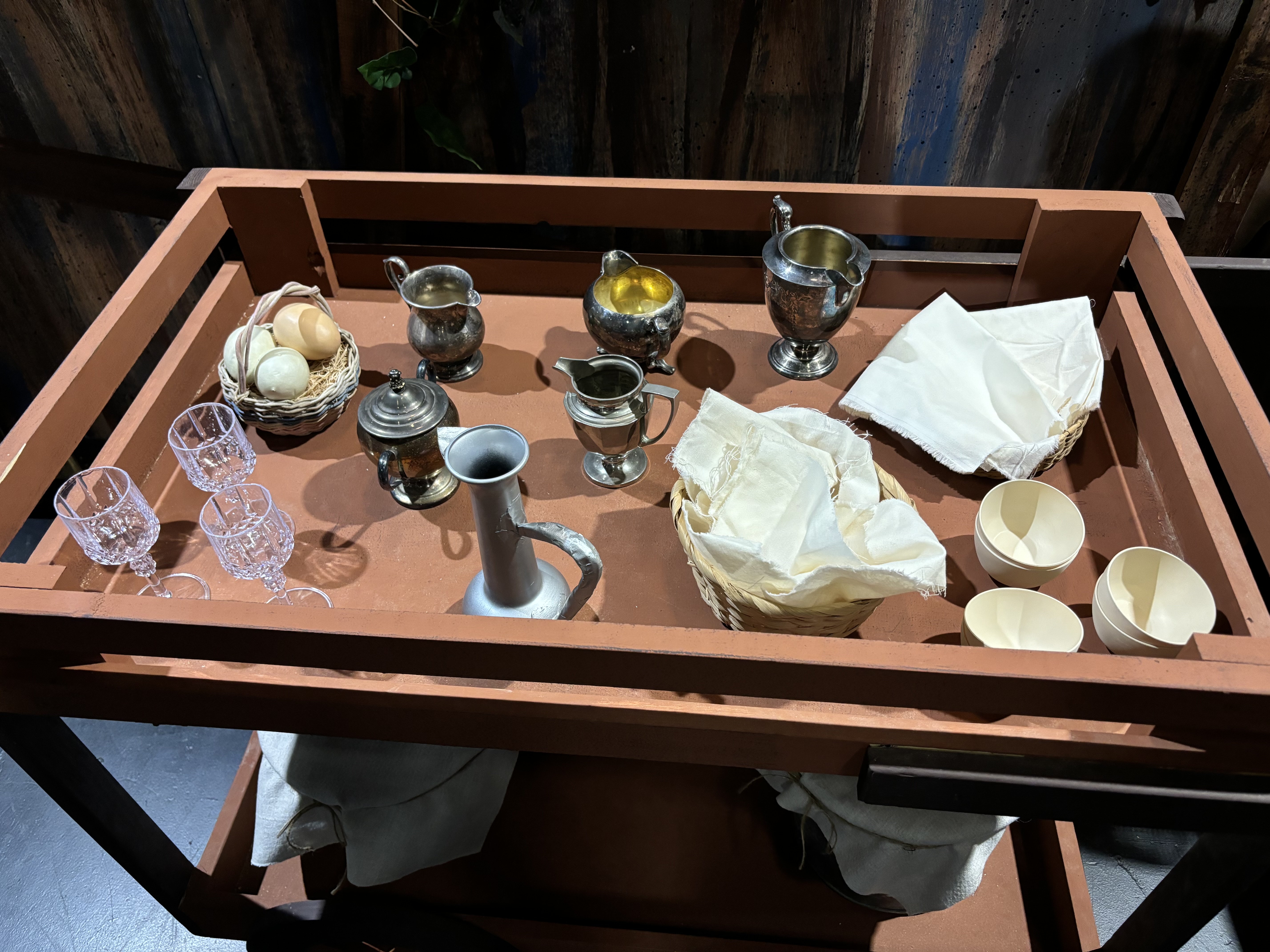
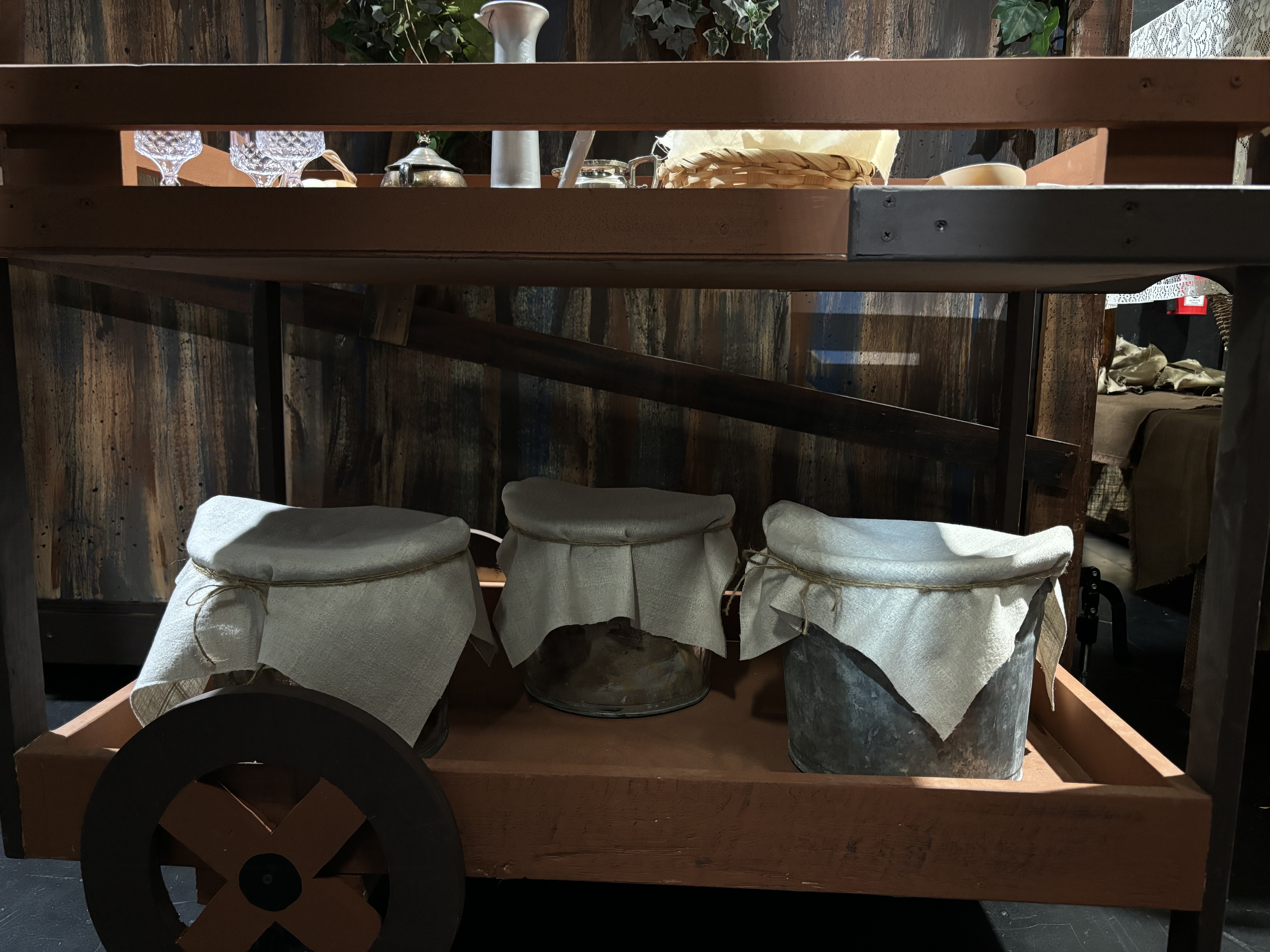
dairy cart
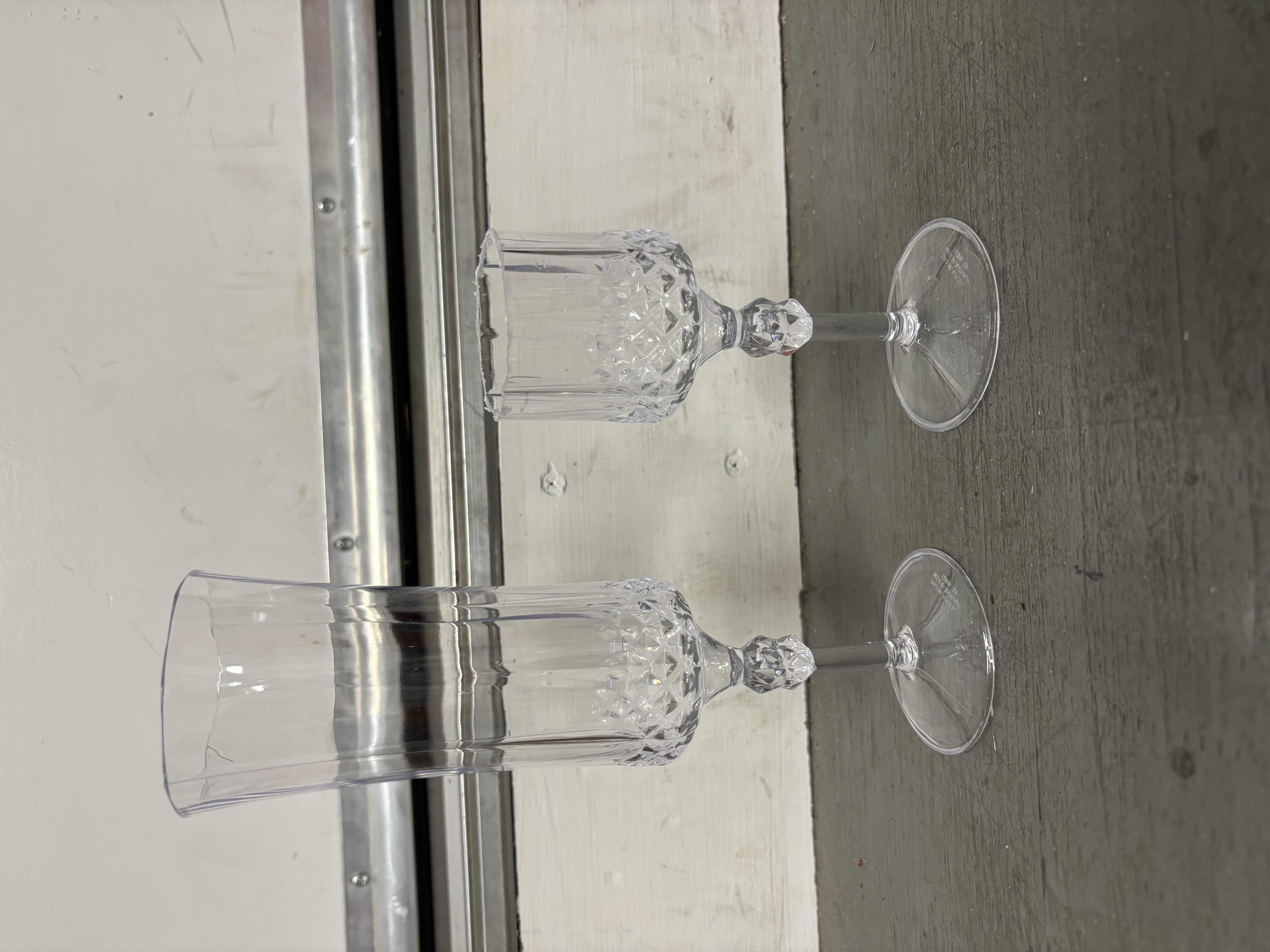
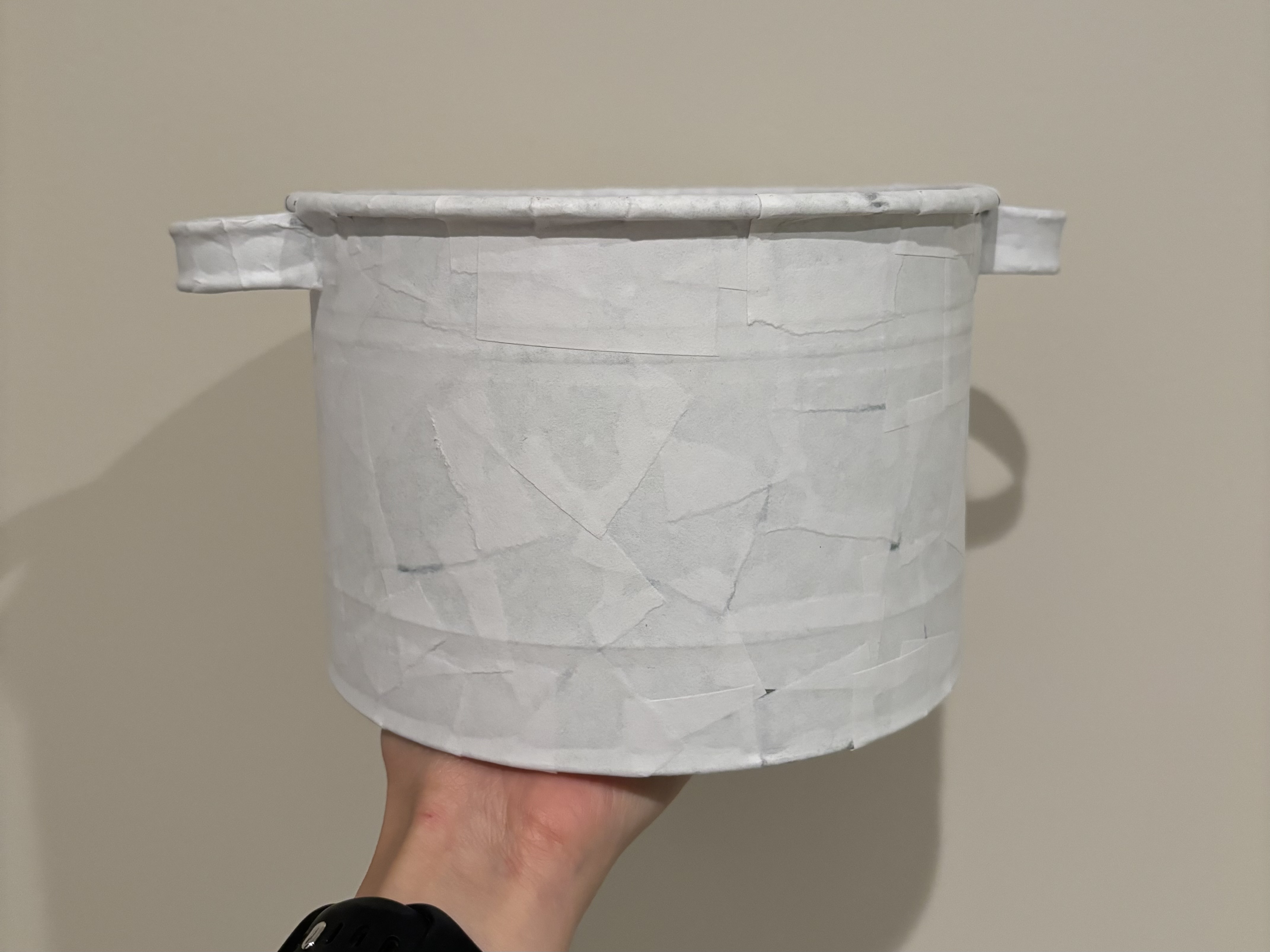
meat cart
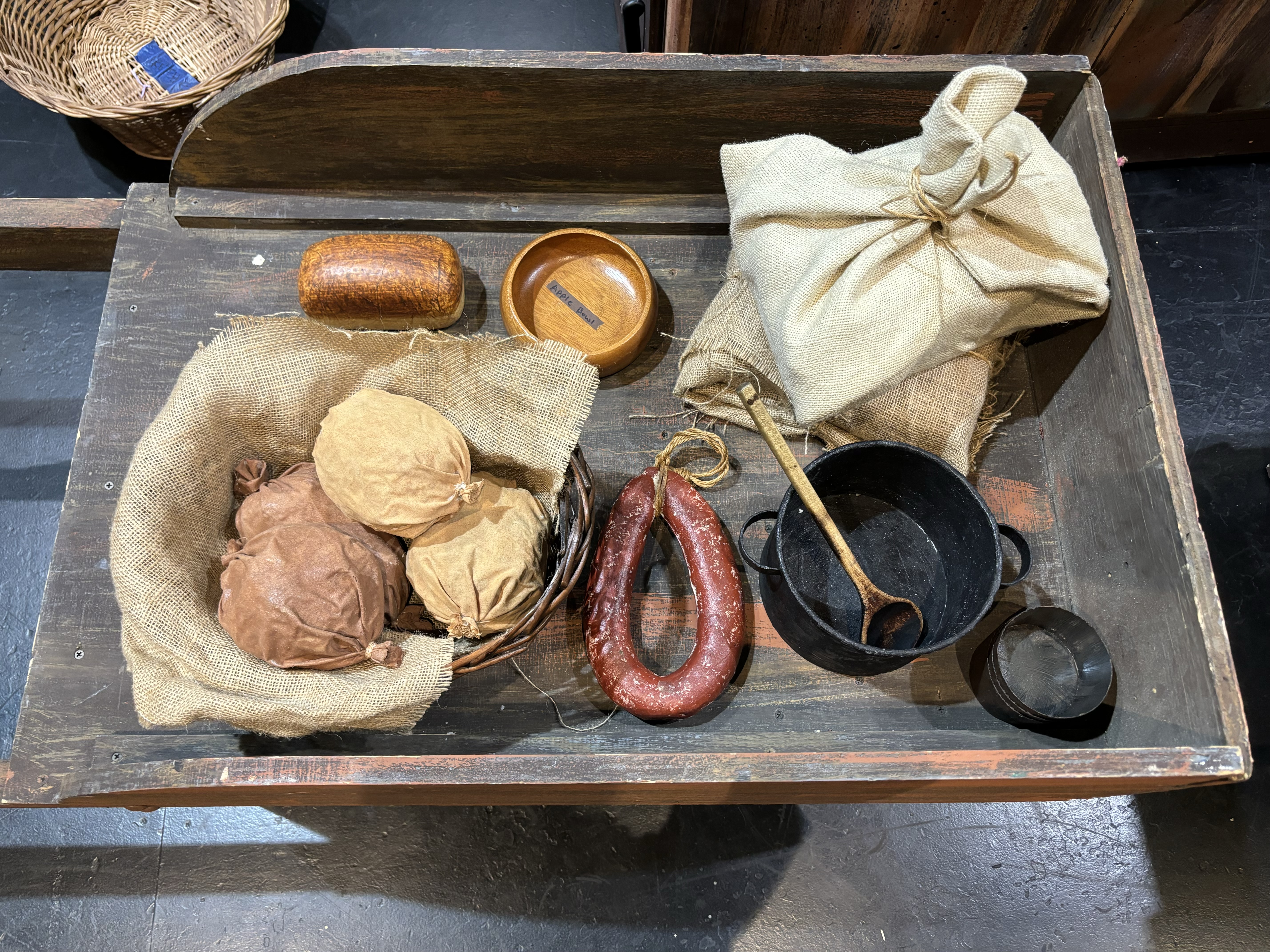
smaller props
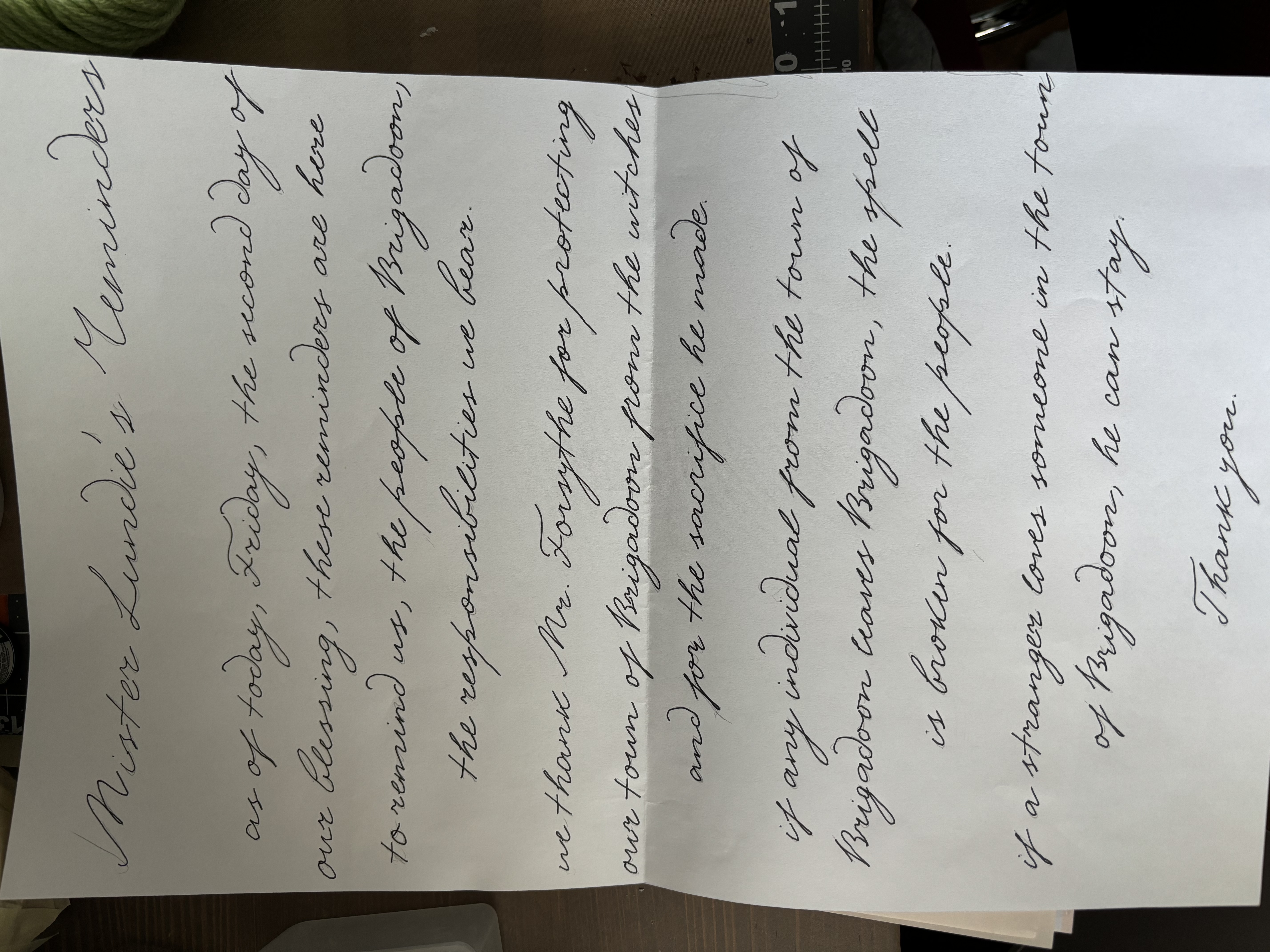
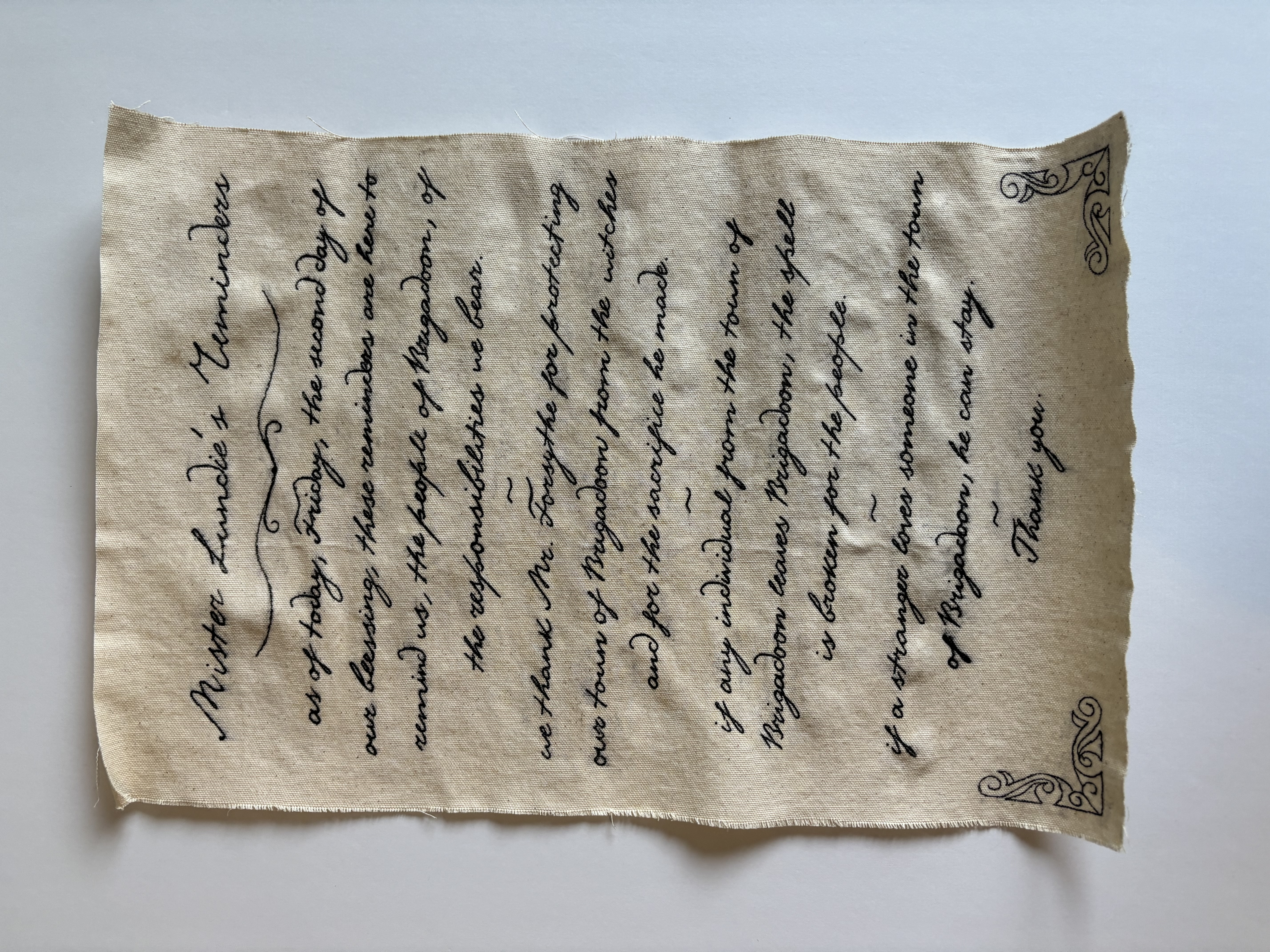
scroll
bible
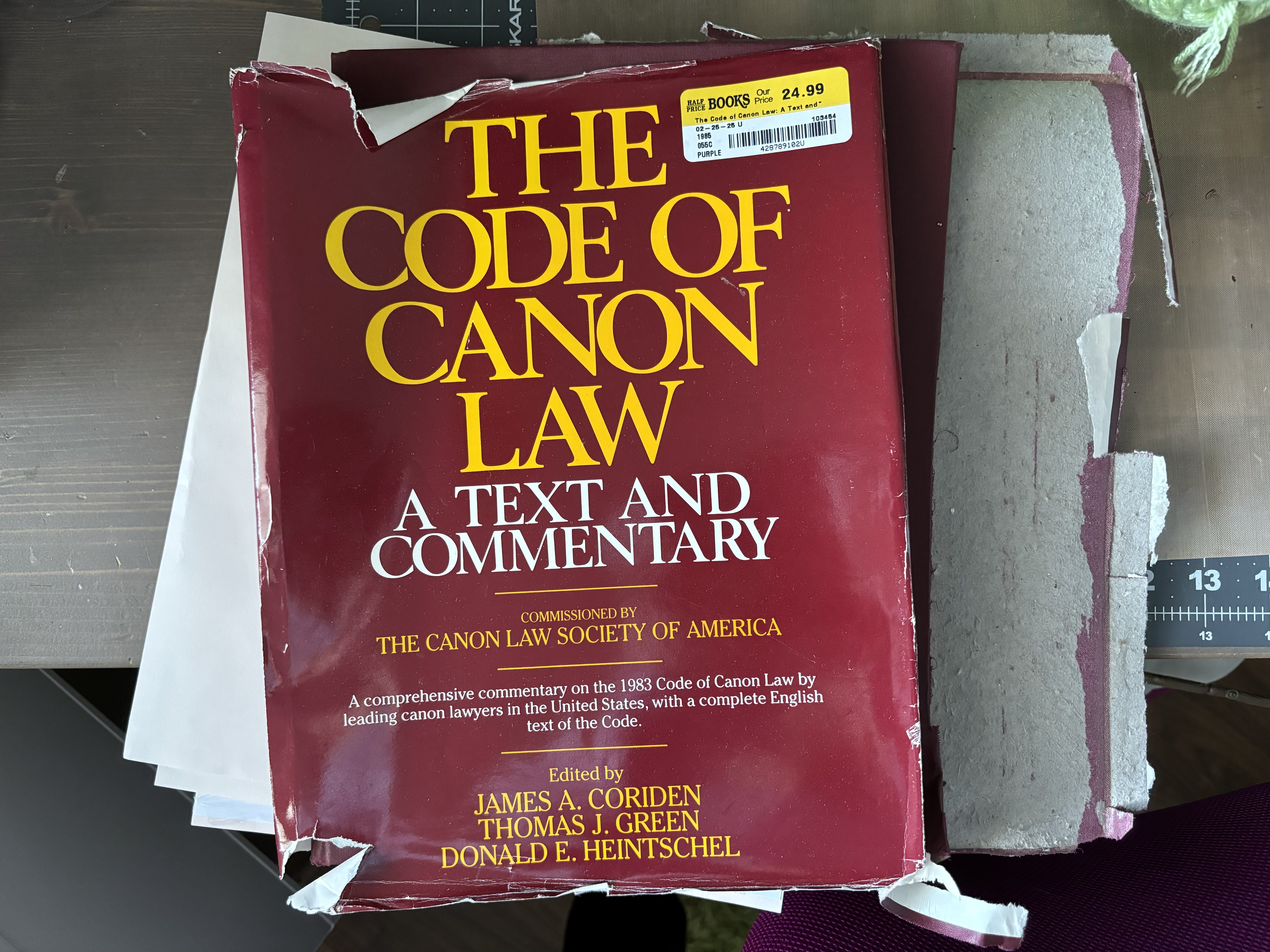
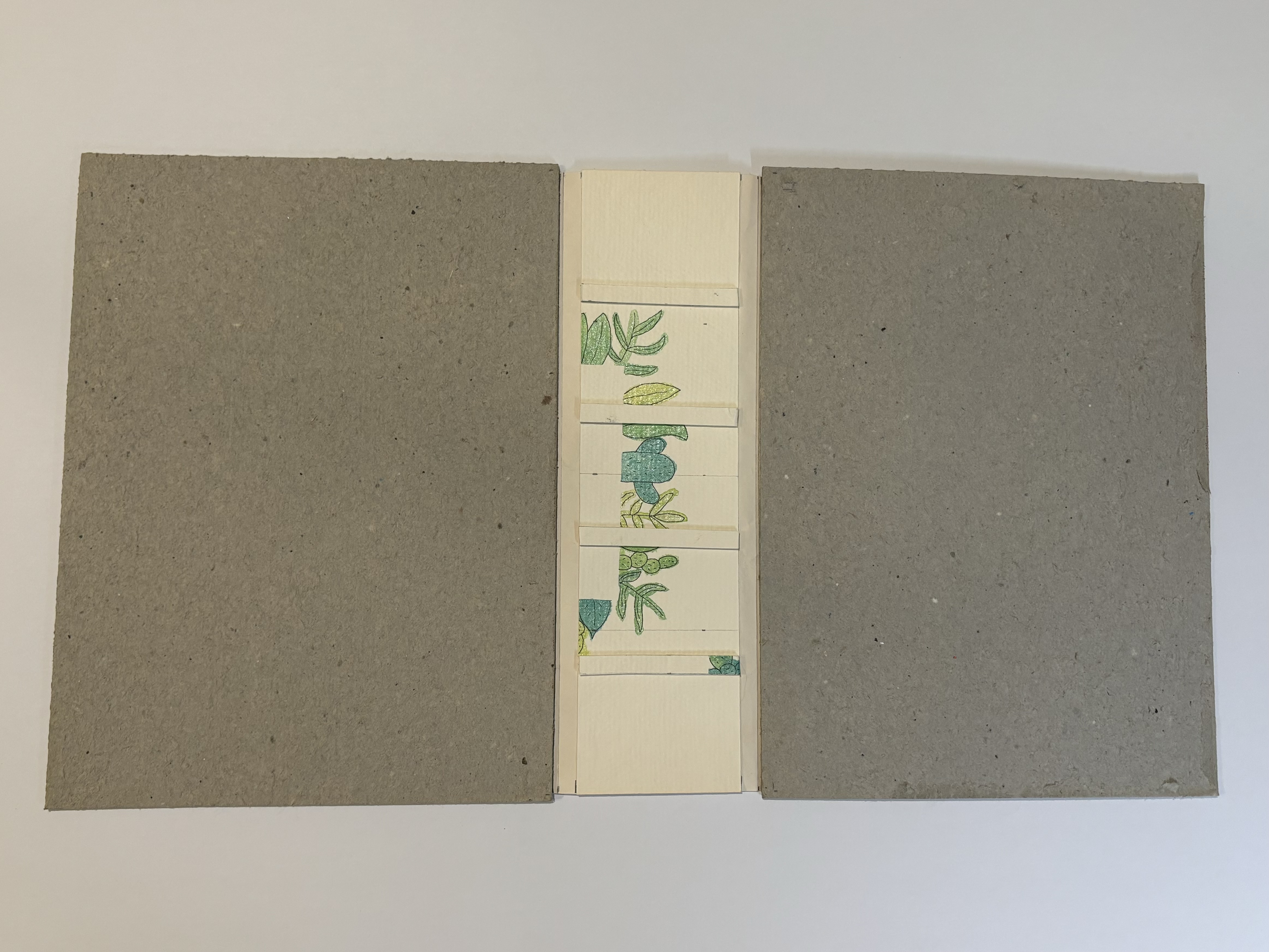
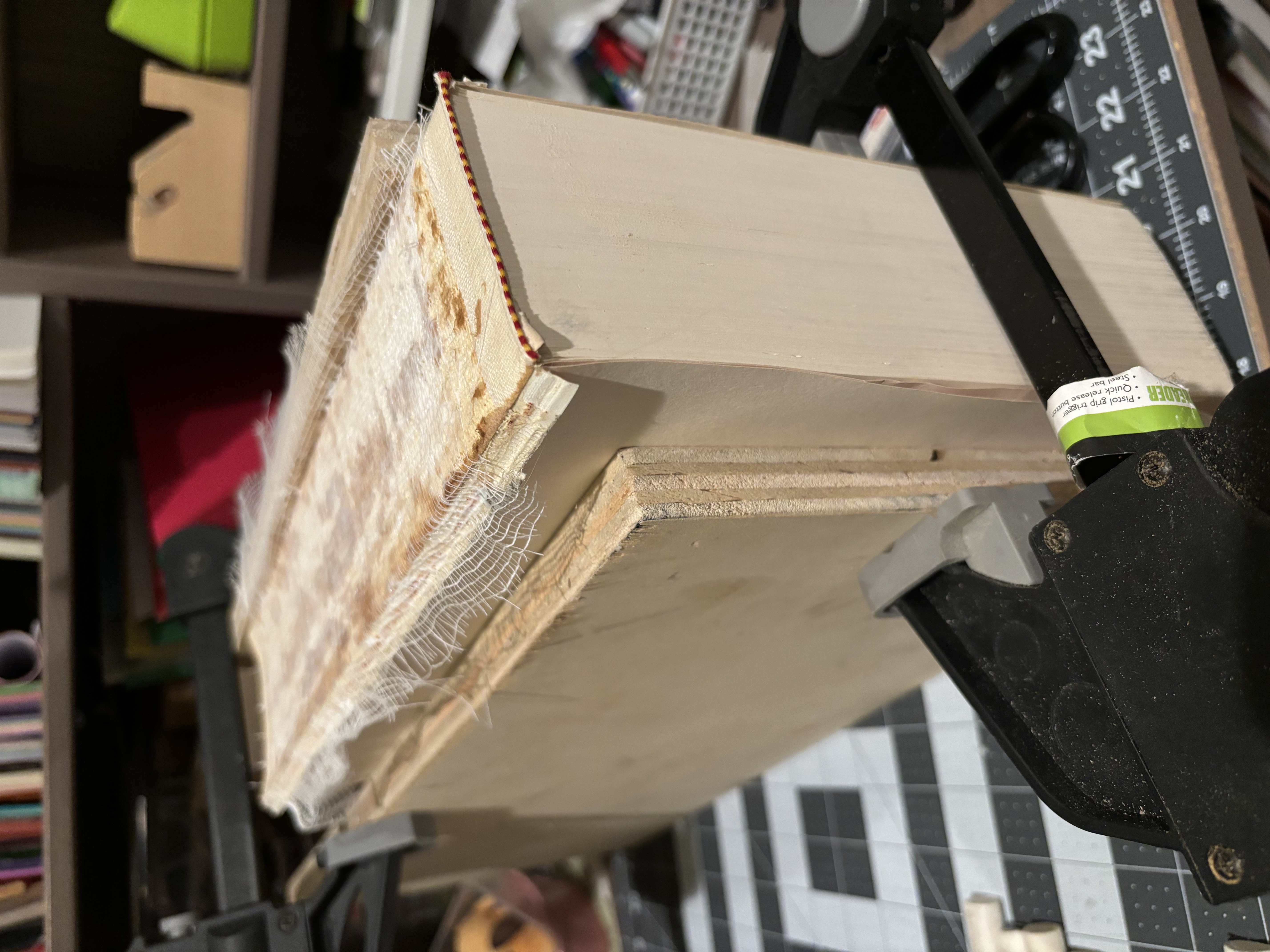
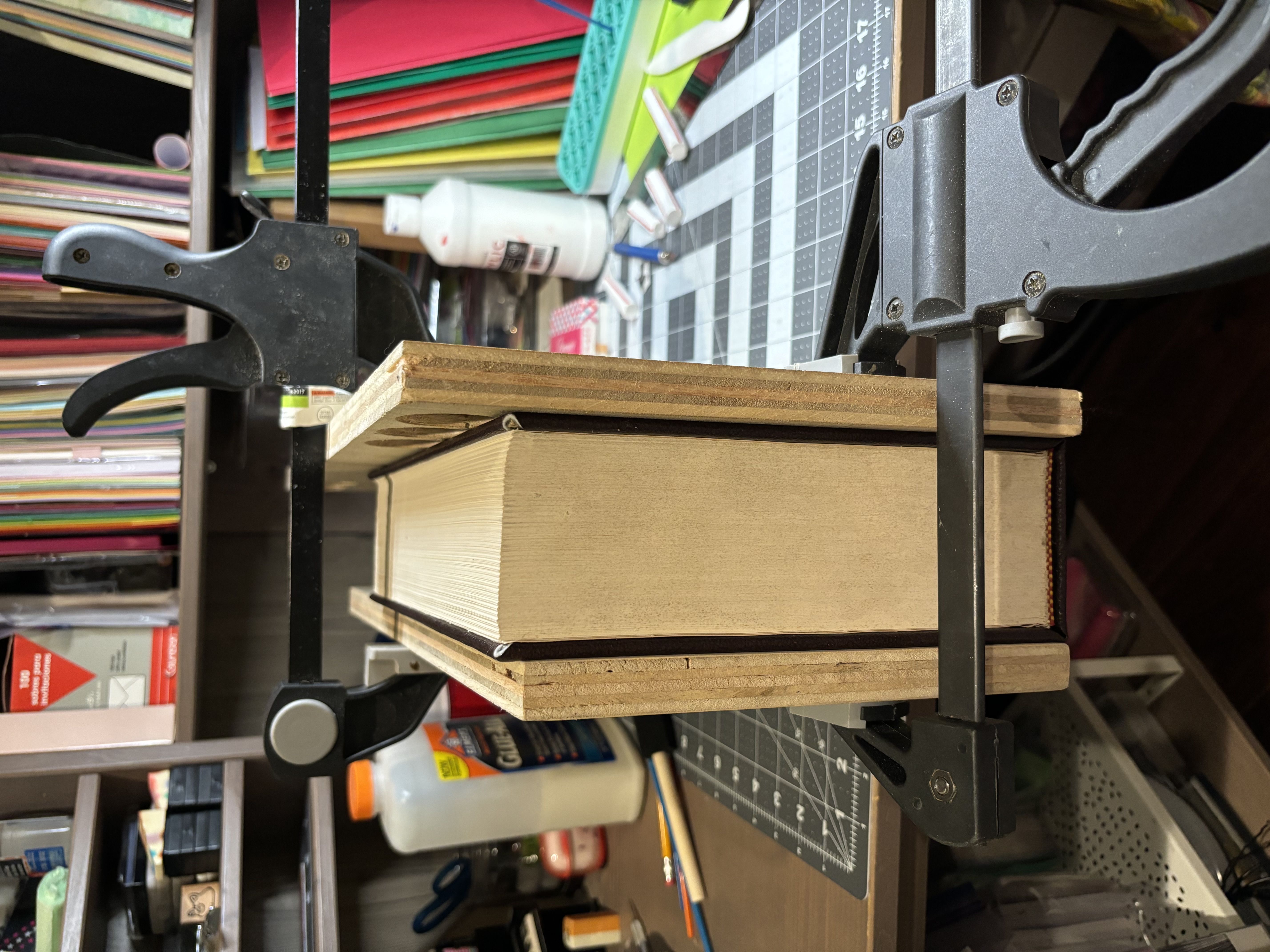
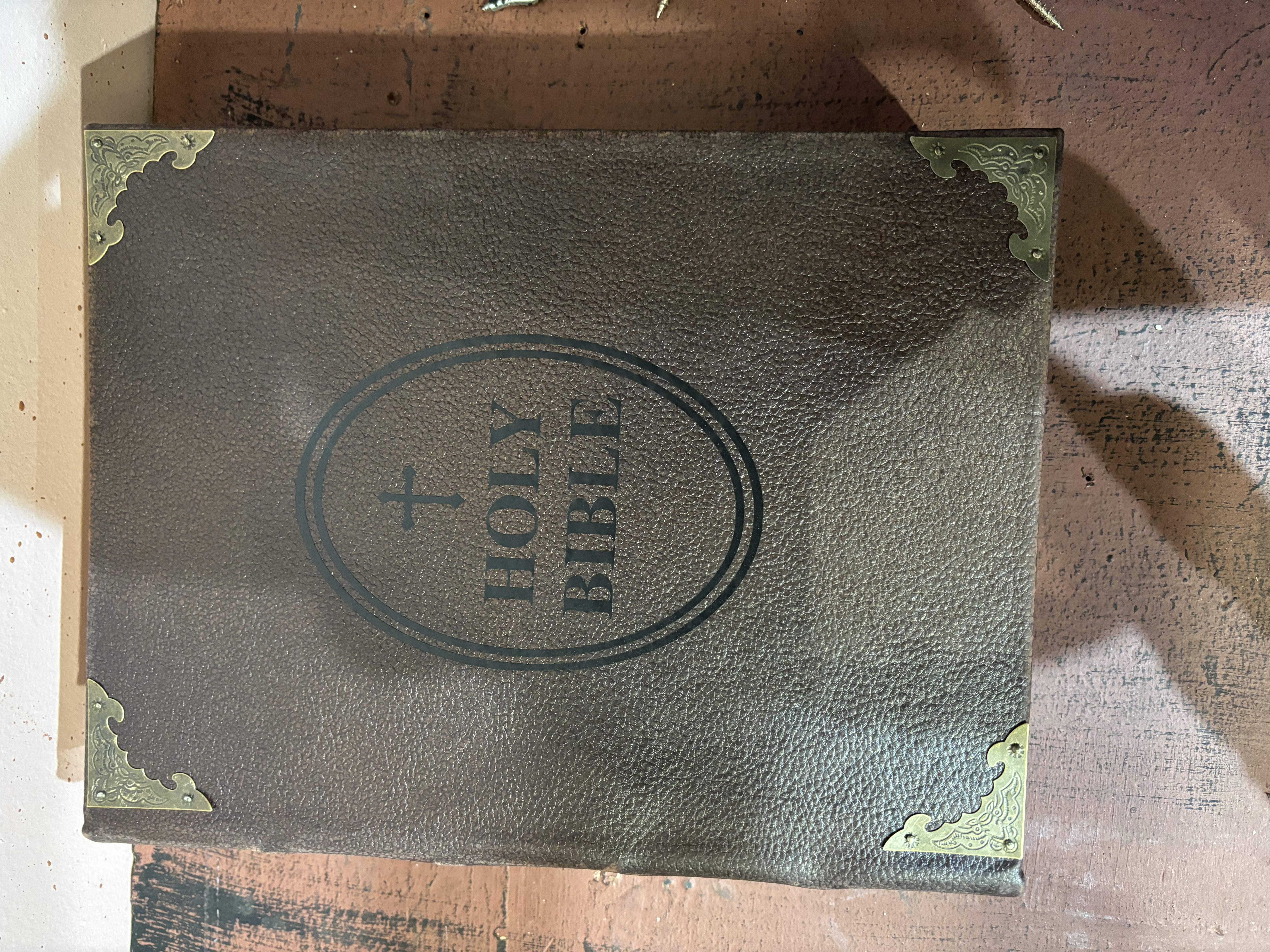
to make the bible, I took the cover off of a book and used that to create a new cover with a spine that had ridges. I also replaced the existing mull with a new piece of cheese cloth. I covered my new book cover with a fake leather material and glued the whole thing to the new spine. on the front of the cover, I used a Cricut machine to cut out the "holy bible" symbol and attached book corners